Malta is a collection of distinct areas, each with its own character. From historic Valletta to charming Mdina, discover where to stay and what to see.
ℹ️ Short answer: For most first-timers, Legligin for slow Maltese tasting (€35–55pp), Trabuxu Wine Bar for small plates and Maltese wine, and Nenu the Artisan Baker for a proper ftira lunch are the three Valletta restaurants worth booking. Noni and Caviar & Bull are the fine-dining picks (€80–130pp). Strait Street is where most evening eating happens; Republic Street is where the historic cafes live. Skip hotel-restaurant generic Mediterranean — Valletta is small enough that the working restaurants are 5 minutes from anywhere. Valletta is small. About 1km long and 600m wide, with maybe 80 restaurants and another 50 cafes and bars packed in between. The good news: the best ones are mostly local, mostly affordable, and walkable to from any Valletta hotel. The bad news: there are a fair number of “international Mediterranean” tourist traps with English menus on Republic Street that will sell you a €22 spaghetti carbonara that lives in a microwaveable form. This guide picks the restaurants that are worth your evening, broken down by what kind of meal you actually want.
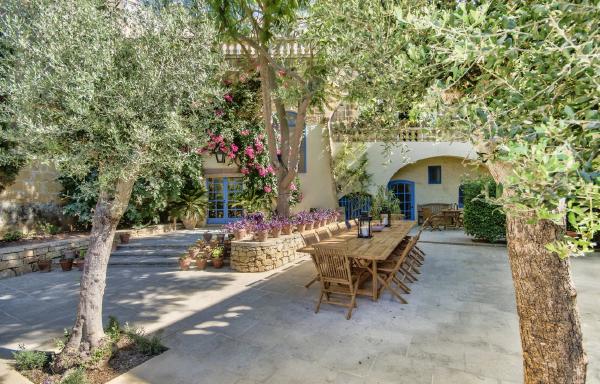
ℹ️ Short answer: Mdina has only a handful of in-walls hotels (the Silent City has 250 residents, not 25,000), and The Xara Palace is the headline luxury pick. Just outside the walls in Rabat, Casa Melita and several smaller boutique guesthouses run at lower rates. Gozo is the boutique-and-farmhouse heaven — Cesca Boutique Hotel and Quaint Sannat lead the boutique pack, while traditional Gozitan farmhouses for whole-house rentals (€120–300/night, sleeping 4–8) are one of the best lodging experiences in the Mediterranean. Book 8–12 weeks ahead for summer. Mdina and Gozo are the two parts of the Maltese islands that reward slowing down. Both have boutique-hotel scenes that have grown quietly over the last decade — Mdina because the in-walls building stock is finite (so the conversions get serious treatment), Gozo because rural farmhouses became the Airbnb-and-boutique-hotel rehab project of the 2010s. The result: in Mdina you can sleep in a 17th-century palace overlooking the bastion walls, and in Gozo you can sleep in a converted three-century-old farmhouse with its own pool and a 360° view of nothing but limestone fields and church domes.
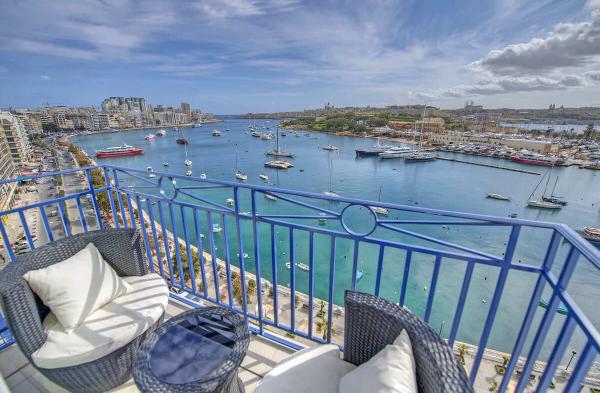
ℹ️ Short answer: Sliema is Malta’s most practical base — walkable seafront, ferry to Valletta in 8 minutes, every restaurant and cafe at hand. St Julian’s is the dressier neighbour. Paceville within St Julian’s is the nightclub strip and the right answer for almost no traveller. The high-end picks are the Westin Dragonara Resort, Hilton Malta, Le Méridien St Julian’s, AX Palace and The Hotel Phoenicia (Floriana, just outside Valletta). Mid-range: Hotel Juliani, Holiday Inn Express Sliema, Plaza Regency. Book seafront-facing rooms 8–12 weeks ahead in summer. Sliema and St Julian’s are where most Malta travellers actually sleep, and for good reason — between them they have 150+ hotels, every restaurant in the country in walking distance, the Sliema-Valletta ferry for sightseeing, and the Coast Road bus connections to everywhere else. The catch is that “Sliema and St Julian’s” is really four neighbourhoods stitched together, each with a very different sleeping experience: the Sliema seafront, inland Sliema (Tigné, Townsquare), St Julian’s Spinola Bay, and Paceville. Pick the wrong one and you’ll be 100m from a 04:00 nightclub bouncer when you wanted to be 100m from a quiet cafe.
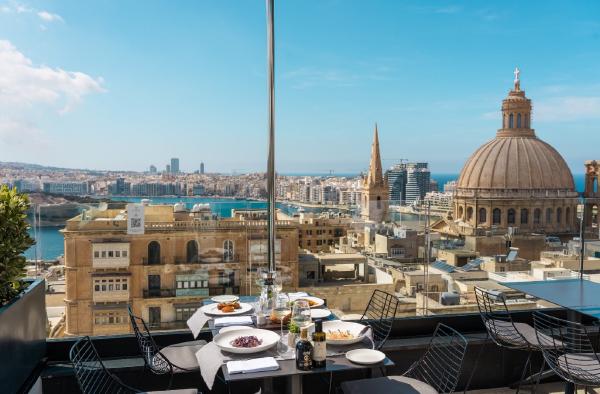
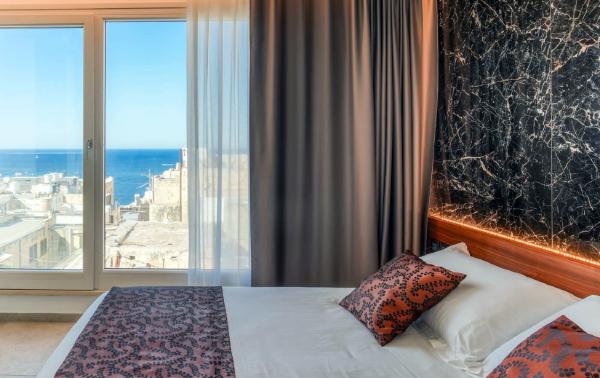
ℹ️ Short answer: Valletta has gone from “no real hotels” to one of the best small-city hotel scenes in the Mediterranean in 10 years. The Phoenicia (just outside City Gate) is the grand classic; Iniala Harbour House is the modern luxury benchmark; Casa Ellul is the small-boutique sweet spot; and The Saint John Boutique Hotel sits in the mid-range range under €200/night. Skip Republic Street if you want quiet — the side streets like Old Bakery, Old Theatre and Strait Street have the same access without the foot-traffic noise. Book 8–12 weeks ahead for summer. Until about 2014, Valletta had two hotels and not much in between. Then the city got serious — UNESCO money, a tourism push around being European Capital of Culture 2018, and a slew of disused palazzos that property developers realised could be 8-room boutique hotels with rooftop terraces. Now there are 50+ hotels in Valletta proper, and the small-luxury scene is one of the most interesting in southern Europe.
ℹ️ Short answer: For most first-timers staying 3–7 days without a car, Sliema is the right base — it’s mid-priced, has the ferry to Valletta, the boat departures for Comino, and a thousand restaurants. Pick Valletta if you want to be inside the postcard and you’re OK paying 30–40% more for a smaller room. Mellieħa wins for families who want a beach. Mdina or Three Cities (Birgu) wins for a quieter, more romantic stay. Paceville is for nightlife only — avoid otherwise. Skip Buġibba unless your priority is a budget package deal. Malta is small — 27 km long — so wherever you stay, you can reach the rest of the island in under an hour. That sounds liberating until you realise it means every hotel claims it’s “perfectly located,” and the actual differences between neighbourhoods are about vibe, transport convenience, and price-per-square-foot rather than distance to the sights.
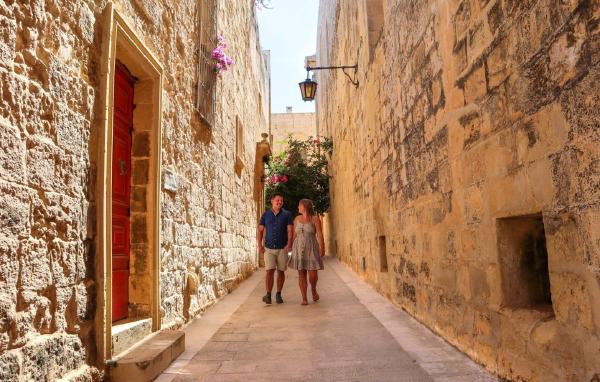
ℹ️ Short answer: For most first-timers, a half-day Mdina + Rabat combo tour from Valletta (€35–45, ~5 hours) is the best single pick — it includes transport, both towns, the catacombs in Rabat, and a guide who can actually tell you the difference between a Knight and a noble. The Mdina night tour (€35) is atmospheric and worth a second visit if you have an extra evening. Game of Thrones fans should book the Mdina + Valletta filming combo. DIY by bus 51/52/53 from Valletta works fine and saves €25 if you don’t need a guide. Mdina is small. About 0.9 km² of bastioned hilltop, 250 residents, three cafes that matter, and a baroque cathedral that punches above its weight. You can walk the whole thing in 25 minutes. Which raises an obvious question: do you actually need a tour? Honest answer: yes, because Mdina without context is just pretty buildings. Mdina with context — Phoenician origins, Norman conquest, the Knights moving the capital out, the Borg family killing each other in the cathedral, the GoT crew filming Ned Stark’s arrival — is the most interesting square kilometre on Malta. A guide is what makes the difference.
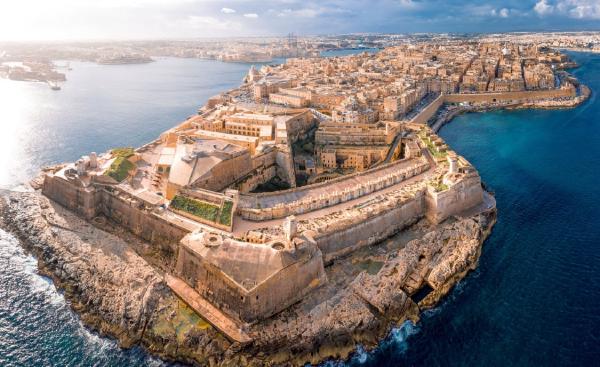
ℹ️ Short answer: For most first-timers, a 2.5-hour paid small-group walking tour (€25–35) is the best single-tour pick — it covers St John’s Co-Cathedral, the Barrakka Gardens, the Knights of St John backstory, and the bits of context that turn “old building” into “ah, so that’s why”. Free tip-based tours are genuinely good and can save you €20 if you’re on a budget. Skip private tours unless you’re 4+ people. The food tour is the one to add as a second tour. Self-guided with an audio app works if you want to move at your own pace. Valletta is small — about 1 km long and 600 m wide — and you can cross it end-to-end in 25 minutes. Which means you don’t need a tour to see it. You need a tour to understand it. Most of what makes Valletta special isn’t the surface (although the surface is gorgeous); it’s the layered history of the Knights of St John, the Great Siege, the British Empire, the WWII Blitz that made it the most-bombed city on earth, and the fact that the whole walled grid was master-planned in the 1500s by an Italian engineer with a thing for grids.