ℹ️ Short answer: A realistic 2026 Malta budget per person per day, before flights: €55–80 backpacker, €120–180 mid-range, €250–450 splurge. A 7-day mid-range couple’s trip lands around €1,400–2,000 all-in (excluding flights). Summer (Jul–Aug) adds 30–60% to hotel rates; winter (Nov–Feb) drops them by half. Eating local pastizzi-and-ftira costs a third of hotel-restaurant prices and is genuinely better. Malta is cheaper than it looks if you eat where Maltese people eat, take the bus until the bus stops making sense, and don’t book a hotel on the Sliema seafront in August. It’s more expensive than you’d think if you do the standard “stay on the waterfront, eat at the restaurants with English menus, taxi everywhere” approach — at which point Malta in summer can quietly hit €300+ per person per day.
ℹ️ Short answer: Pack light layers, walking shoes you can do limestone steps in, and proper sun protection. The Maltese summer is hotter and brighter than most visitors expect; the winter is mild but wet. Skip: big hiking boots, heavy jackets, “modest covering” full kits (you only need a light scarf for cathedrals), and any “river-and-sea” sandals — Malta’s beach access is rocky, and you want either flip-flops or proper water shoes, not both. Most Malta-specific gear is cheaper to buy at home than in Sliema. The honest truth about packing for Malta: you don’t need much, but the small things matter. Limestone steps eat shoes. The summer sun reflects off the white stone and burns the bits sunscreen ads ignore (the bottom of your feet at the beach, the back of your hands holding a phone). The winter wind on the Dingli cliffs in February is colder than the temperature suggests. And the water shoes you almost-skipped are the ones you’ll wish you packed when you’re trying to climb out of a rocky cove with the tide picking up.
ℹ️ Short answer: The Malta Pass pays off for fast-moving sightseers doing 4+ paid attractions in 2–3 days — typically €20–40 of net savings on a 3-day pass. It does not pay off for slow travellers, beach-focused trips, families with under-10s, or anyone whose Malta plan is “Valletta + Comino + a few good lunches.” For most first-timers, buying tickets individually as you go is genuinely cheaper. We’d buy the pass for 3 specific traveller profiles and skip it for the rest. The Malta Pass is the island’s official tourist sightseeing pass — a single QR-code ticket that gets you into 30+ attractions, includes the hop-on hop-off buses, and aims to do for Malta what the London Pass does for London. Like every “city pass” ever invented, it’s a great deal for some travellers and a quiet money-pit for others, and the marketing copy doesn’t help you tell which one you are.
ℹ️ Short answer: The best time to visit Malta is late May to mid-June or mid-September to mid-October — warm enough to swim (24–26°C sea), warm enough to walk Mdina without melting (24–28°C air), and quiet enough that Comino’s Blue Lagoon still looks like the brochure. July and August are hot (30–34°C), crowded, and the Blue Lagoon at midday is unrecognisable. November to March is mild (15–18°C daytime), bargain-priced, often sunny, but the sea is too cold to swim and boat tours run reduced schedules. April and early May are spring-cool with patchy rain. We’d book May or September every time. Malta is a year-round destination in the strict sense — restaurants stay open, planes still land, Valletta still looks like Valletta in February. But the experience changes more than people expect from one month to the next. The Blue Lagoon in October is empty water and limestone; in August it’s a floating queue. The Tallinja bus to Mdina is a calm 30 minutes in March and a sweaty hour in July. And the price of a hotel in Sliema swings by 60% across the calendar.
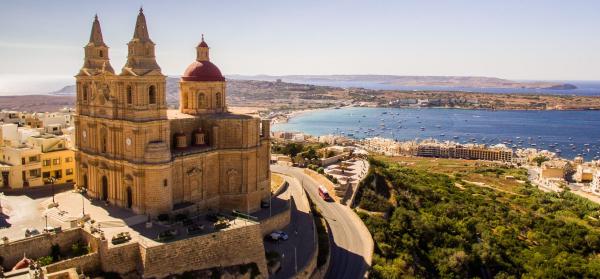
ℹ️ Short answer: For most first-timers staying 3–7 days without a car, Sliema is the right base — it’s mid-priced, has the ferry to Valletta, the boat departures for Comino, and a thousand restaurants. Pick Valletta if you want to be inside the postcard and you’re OK paying 30–40% more for a smaller room. Mellieħa wins for families who want a beach. Mdina or Three Cities (Birgu) wins for a quieter, more romantic stay. Paceville is for nightlife only — avoid otherwise. Skip Buġibba unless your priority is a budget package deal. Malta is small — 27 km long — so wherever you stay, you can reach the rest of the island in under an hour. That sounds liberating until you realise it means every hotel claims it’s “perfectly located,” and the actual differences between neighbourhoods are about vibe, transport convenience, and price-per-square-foot rather than distance to the sights.
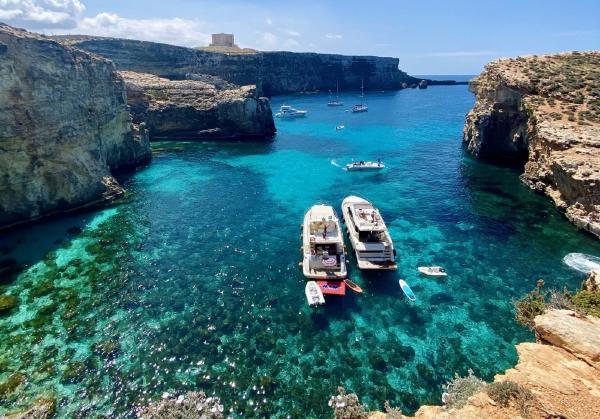
ℹ️ Short answer: The fastest, cheapest way to Comino is the shuttle ferry from Ċirkewwa (Malta’s northern tip), running every 30 minutes in summer for ~€15 return, 25-minute crossing. If you want the headline experience — Blue Lagoon plus Crystal Lagoon plus Gozo’s caves and lunch on board — book a full-day cruise from Sliema (€35–45). For the quietest swim, take a small-group RIB or catamaran from Mġarr or Buġibba (€60–100), which arrives before the big boats. Avoid 11:30–14:00 in July and August whichever option you pick. Comino has three permanent residents, no cars, no shops, one chapel, and somewhere between 6,000 and 10,000 day visitors a day in the high season. The island is 3.5 km², 90% of which is fenced-off Natura 2000 reserve, which means almost everyone is funnelled to the same 200 metres of coastline — the Blue Lagoon — at the same hours of the day. Picking the right way to get there isn’t a budget question. It’s a when do you want to be in the water question.
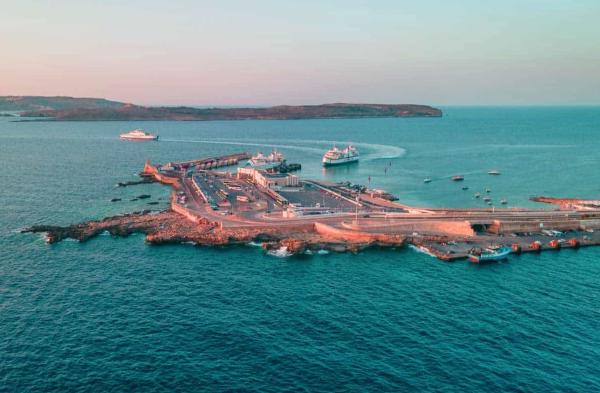
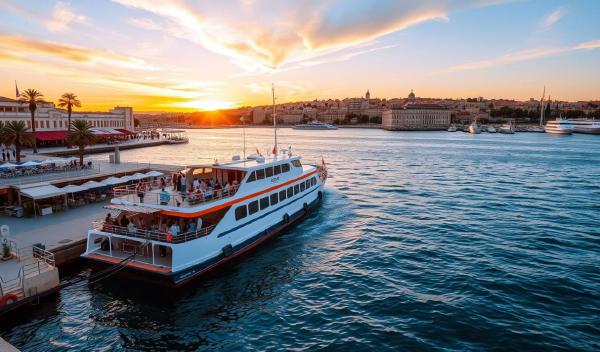
ℹ️ Short answer: The Gozo Channel ferry from Ċirkewwa (Malta) to Mġarr (Gozo) runs every 30–45 minutes in summer, takes 25 minutes, costs €4.65 return as a foot passenger (paid only on the way back from Gozo) and €15.70 return with a car. No advance booking — show up and pay. There’s also a Valletta fast ferry to Mġarr (45 minutes, €7.50 single) that saves the bus to Ċirkewwa if you’re staying in Valletta. Avoid Friday afternoons and Sunday evenings — car queues hit 90+ minutes. The ferry to Gozo is the smoothest piece of public transport in Malta, which is faint praise but accurate. Two boats, a 25-minute crossing, no booking, pay on the way back, and you’re on the second island. The whole system has run roughly the same way for decades and works because of it.
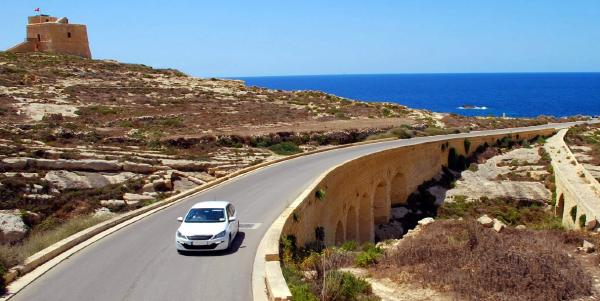
ℹ️ Short answer: A rental car in Malta is worth it for 3–4 days, not 7. Pick it up when you leave the Sliema/Valletta area for Mdina, Dingli, the south coast and Gozo; skip it for the city days when buses, ferries and walking are faster. Expect €25–45/day for an economy car in shoulder season, plus €20–30/day in summer surcharges and parking-anxiety. Driving is on the left, the roads are narrow, and Maltese drivers are creatively assertive — but it’s manageable for any confident driver who’s done a 30-minute orientation lap. There’s a question every Malta visitor eventually asks: do I rent a car or not? The internet is split. Forums say “absolutely necessary.” Bloggers say “Malta is too small, just take the bus.” Both are wrong, because the right answer is “depends which days.” Malta is small enough that you can do Valletta, Sliema and Mdina without a car, and big enough that Gozo, the south coast and Comino-side beaches are noticeably better with one. The trick is renting for the days that need it and not the days that don’t.
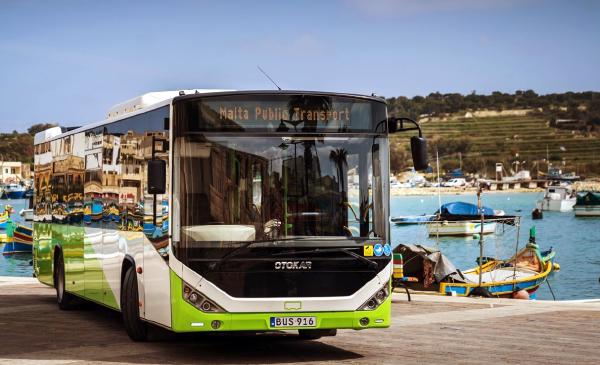
ℹ️ Short answer: Malta’s public bus is run by Tallinja (Malta Public Transport). A single ride is €2.50 in summer (15 June – 15 October) or €1.50 in winter, valid for 2 hours including transfers. If you’re staying 4+ days, buy a Tallinja Explore Card (€21 for 7 days, unlimited rides) at the airport or Valletta terminus. Download the official Tallinja app for live tracking. Hail the bus like a taxi when you see it coming, or it’ll drive past you. The 222 in summer is genuinely cursed — take a Bolt instead if you’re going to Ċirkewwa. The Maltese bus network is the best transport bargain in the Mediterranean and one of the more confusing to use on Day 1. The fares change with the season, the cards have four different versions, the app is good but buried under a website that looks like 2014, and the buses themselves do not stop at stops unless you flag them down. Once you’ve got the rhythm, it’s brilliant. The first 24 hours are a learning curve.
ℹ️ Short answer: From Malta International Airport (MLA, Luqa) you’ve got four sensible options for getting to Valletta, Sliema or St Julian’s. The cheapest is the Tallinja X-bus (€2.50 summer / €1.50 winter, 25–45 min). The fastest with luggage is Bolt or eCabs (€15–22, ~20 min). The least stressful at 1am with kids is a pre-booked private transfer (€25–40, driver waits at arrivals with your name). Skip the rental car for at least your first day — Valletta and Sliema are not where you want to learn Maltese parking. Malta International Airport sits in Luqa, about 8 km south of Valletta, 10 km from Sliema and 12 km from St Julian’s. The whole island is small enough that no transfer takes more than 45 minutes, but the right transfer depends entirely on what time you land, how much luggage you’ve got, and whether you’ve already had three espressos or zero hours of sleep.
ℹ️ Short answer: Malta is a genuinely great family destination — short flights from Europe, English everywhere, safe, walkable, with beaches, forts, boat trips and a working Popeye Village that toddlers cannot get over. The trick with kids: stay in Mellieħa or Buġibba (not Sliema/Paceville), slow the pace to one big thing per day, and accept that any day with limestone-step sightseeing for under-7s ends in tears. This 5-day itinerary works for kids roughly 4–11; we flag what to swap for younger and older. Family travel in Malta is easier than family travel in most of southern Europe. Distances are tiny, English is universal, the medical system is European-standard, and almost every restaurant has half-portions and a high-chair without making a face about it. The catch: most Malta itineraries online are written for couples, with day plans that work fine for two adults and quietly demolish a 5-year-old by 14:00.
ℹ️ Short answer: Malta in winter (Nov–Mar) is mild (12–18°C daytime), half-empty, and 40–60% cheaper than summer. The sea is too cold for comfortable swimming, some Gozo restaurants close for the season, and Comino boat tours scale back hard. What works brilliantly: Valletta and Mdina at their atmospheric best, hiking the Dingli–Buskett–Gozo coast, food (rabbit-stew season), and museum-and-cathedral days without queues. This 4-day itinerary covers Valletta, Three Cities, Mdina/Rabat and a Gozo day-trip, all without a swimsuit or a sweat. Most travel writing about Malta is summer writing. Beach writing. Sun writing. Which is fine — Malta in July is genuinely great if you’ve made peace with crowds and 35°C heat. But Malta has a quieter trick: from mid-November to mid-March the islands turn into the warmest, cheapest, most walkable corner of Europe with restaurants you can actually get a table at and a Mdina bastion-wall view that’s all yours.