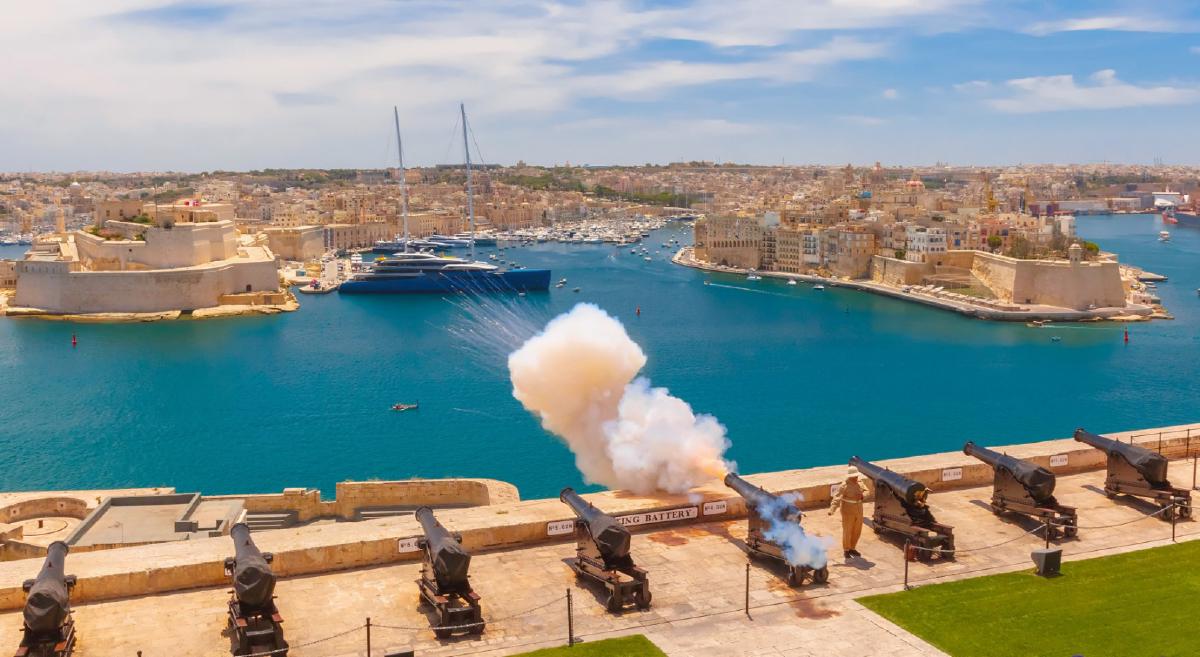
Malta packs more into 316 square kilometres than most countries fit into a province. A UNESCO capital, prehistoric temples older than the pyramids, a flooded sea cave the colour of pool-cleaner blue, and a sister island that still feels like 1995 — and you can do the whole core run in three days without ever sitting behind a steering wheel. We’ve planned and re-planned this trip enough times to have opinions about which bus to skip in August (the 222), which ferry is worth the €1.50 (all of them), and which “must-see” you can probably miss if you’re tight on time.
This is a 3-day Malta itinerary built for someone with a carry-on, comfortable shoes, and zero interest in driving on the left for the first time on holiday.
Some links below are affiliate links — they don’t change your price, and they help keep this guide free.
Do you actually need a car for 3 days in Malta?#
No. For a 3-day trip focused on Valletta, Comino, and Mdina, a car is more friction than freedom. Parking in Valletta is genuinely awful, the old-town streets weren’t built for anything wider than a donkey, and the bus + ferry network covers every place on this itinerary. Skip the rental and put the saved €120-ish toward a Comino boat tour with a smaller group. We have a longer breakdown of renting a car in Malta if you’re road-tripping for a week, but for three days you don’t want one.
Where to base yourself for a no-car 3 days#
Sliema. It’s the answer 80% of the time for a no-car short trip. Here’s why:
- The Sliema–Valletta ferry leaves every 30 minutes and takes 10 minutes. That’s your fast lane into the capital.
- Most Comino and Gozo full-day boat tours depart from Sliema’s seafront — you walk to the boat.
- Hotels are noticeably cheaper than equivalent rooms inside Valletta, and there are far more options around the €100/night mark.
- You’ll find a normal supermarket, a thousand cafés, and the kind of Mediterranean evening waterfront walk that makes you forget you’re 30 minutes from a major airport.
Valletta itself is gorgeous to stay in, but the boutique stock is small and prices punch above their weight. St Julian’s is fine but skews young, loud and Paceville-adjacent. For a more nuanced breakdown — including which streets to avoid in summer — see our guide to where to stay in Malta.
Day 1: Valletta on foot#
The capital is small — you can cross it end-to-end in 25 minutes — which makes it perfect for a slow first day after a flight. Take the ferry from Sliema (€1.50 single, every 30 min) rather than the bus; you arrive at the foot of the city walls and walk up via the Lascaris steps or the Barrakka Lift.
Morning: St John’s Co-Cathedral and the Barrakka Gardens#
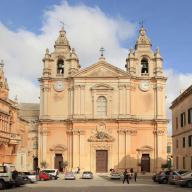
Start at St John’s Co-Cathedral. From the outside it looks like a stern fortress — built by the Knights of St John, who weren’t really a “soft furnishings” sort of order. Inside, it explodes into baroque gold and a Caravaggio so good he signed it in the blood pooling out of his decapitated saint. Allow 60–90 minutes; the audio guide is included and worth using.
Walk five minutes to the Upper Barrakka Gardens for the panoramic shot of the Three Cities and the Grand Harbour. If you can be there by 11:55, you’ll catch the Saluting Battery firing at noon — a small, free, slightly daft ceremony that’s been going since the British were running things. It’s the closest you’ll get to time travel without buying a ticket.
Lunch on Strait Street#
Strait Street used to be where British sailors went to make poor decisions; now it’s where Maltese chefs do the opposite. Tico Tico does excellent Maltese small plates; Trabuxu Bistro is the move if you want a proper sit-down lunch. Either way, expect €15–25 a head with a glass of wine.
Afternoon: Grand Master’s Palace + Lower Barrakka#
The Grand Master’s Palace runs the now-and-then armoury and state-rooms ticket — go if you like medieval halberds; skip it if you don’t. The Lower Barrakka Gardens are smaller, quieter and angled for a softer late-afternoon light over the harbour.
If you’ve still got energy, take the Three Cities ferry from below the lift (€1.50 each way) to Birgu/Vittoriosa for an hour of waterfront walking. It’s the kind of stroll that stops time.
Evening: dinner in Valletta or back in Sliema#
Eat in Valletta if you booked. The good places fill up by 8pm — Noni (Michelin-starred but not insane), Rampila (in the city walls), and Legligin (wine bar with proper food) all need reservations on weekends. Otherwise, ferry back to Sliema and eat on the seafront — half a dozen good spots and no need to plan ahead.
Skip the Self-Guided Stress: Valletta Walking Tour
A 2.5-hour small-group walking tour covering St John’s, the Barrakka Gardens, and the Knights’ history that ties everything together. Worth it on Day 1 if you only do one guided thing on this trip — context turns “old building” into “the building Caravaggio fled to after stabbing a guy in Rome.”
For more options — including the free tip-based tours that are genuinely good — see best Valletta walking tours.
Day 2: Comino, the Blue Lagoon, and Gozo by boat#
This is the day you’ll remember. Book it before you leave home. Walk-up tickets exist, but in July and August the popular cruises sell out a day or two ahead, and the smaller, less-crowded boats sell out a week ahead.
What you’re actually doing#
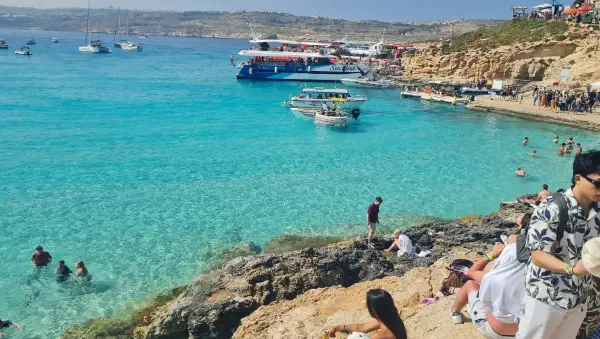
A full-day cruise from Sliema (or Bugibba on the north coast) typically runs 9:00–17:30, stops at the Blue Lagoon on Comino for 1.5–2 hours of swimming, sails through the Crystal Lagoon, ducks into a couple of sea caves on Gozo’s coast, and gives you time on Gozo for lunch ashore or a swim. The big-boat cruises are €30–45; the smaller catamaran/RIB options are €60–90 and worth it on weekends because the Blue Lagoon at midday in August is genuinely a spectacle in the wrong way — somewhere between a swim and a stadium concert.
Comino + Blue Lagoon + Gozo Full-Day Cruise
Departs Sliema seafront, includes the Blue Lagoon, Crystal Lagoon, and Gozo’s caves. Lunch and one drink usually included on the bigger boats. Bring reef shoes — the entry rocks are sharp.
Smaller-group alternatives if you hate crowds#
For a much deeper comparison — including the DIY Ċirkewwa-ferry-plus-Comino-shuttle option that costs about €15 if you don’t mind logistics — see our Comino & Blue Lagoon tour guide and how to get to Comino.
Day 3: Mdina, Rabat, and a slice of the south#
Day 3 is your “ancient and rural Malta” day. The good news: it’s also the day where you can choose your own ending — beaches, fish markets, or a sea cave — depending on the weather and how cooked you are from yesterday’s boat.
Morning: Mdina, the Silent City#
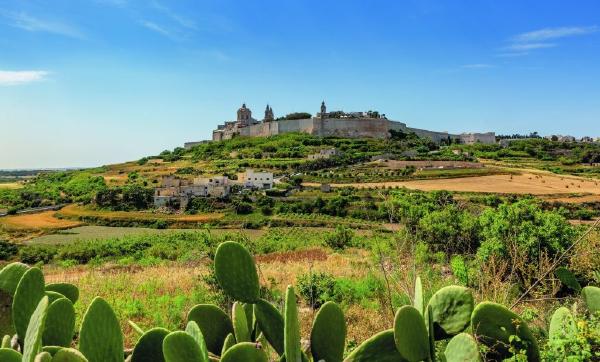
Catch the bus 202 from Sliema (or 51 / 52 / 53 from Valletta) to Mdina. Plan ~50 minutes from Sliema, ~30 from Valletta. The “Silent City” is a walled medieval old town with about 300 residents and very strict rules about cars, which is why the alleys feel like a film set. (They actually are — King’s Landing was filmed here for Game of Thrones Season 1.)
What to do:
- Walk the perimeter walls for the views over the centre of the island.
- Pop into St Paul’s Cathedral — smaller and quieter than St John’s, with a Mattia Preti altarpiece.
- Coffee and the famous chocolate cake at Fontanella Tea Garden on the bastion wall. Yes, it’s touristy. Yes, the cake is genuinely good. Yes, you’ll queue at noon — go at 10:30 or 15:30.
Walk down to Rabat (the town just outside Mdina’s walls — different from Gozo’s Rabat, because Malta does not believe in unique placenames). See St Paul’s Catacombs if early-Christian burial complexes are your thing; otherwise skip and have a long lunch at Crystal Palace, the pastizzi place that locals still rate as the best on the main island.
Afternoon: pick your ending#
Option A — Marsaxlokk + Blue Grotto (best on Sundays for the fish market): bus 81 / 85 from Rabat, change at the Mater Dei terminus or central Mosta. About 60–80 minutes — annoying but doable. Marsaxlokk is the colourful-fishing-boat photo you’ve seen on every Malta postcard. Blue Grotto is a 10-minute boat ride into a glowing sea cave; €10 cash-only, runs roughly 9:00–17:00 in summer if the sea is calm.
Option B — Stay in Mdina for sunset. The bastion-wall view at golden hour is one of the quietly best things in Malta. Have an early dinner at De Mondion if you booked weeks ago, or Don Berto in Rabat if you didn’t.
Option C — Beach finish. Bus 223 from Sliema to Golden Bay (or 222 if you’re patient — but in July/August the 222 in summer traffic is, as we said up top, a slow-cooked existential crisis). Wide sandy bay, sunset over open sea.
If you’d rather not deal with bus connections on your last day, a half-day group tour is honestly fine here. More options in our best Mdina & Rabat tours breakdown.
Getting around Malta without a car#
Three things do 95% of the work:
- The Sliema–Valletta ferry. €1.50 single, every 30 minutes from ~07:00 to ~23:00, takes 10 minutes. Faster than the bus, prettier, and it never gets stuck in traffic.
- Tallinja buses. Single ticket €2.50 in summer (15 June – 15 October), €1.50 in winter, valid for 2 hours including transfers. Buy a Tallinja Explore Card (€21 for 7 days, unlimited rides) at the airport or any major terminus and forget about exact change. The official Tallinja app works for live tracking and is mostly accurate. Full details in our Malta public bus guide.
- Bolt and eCabs. Both apps work normally in Malta. A Sliema-to-Valletta cab is ~€8–12; airport-to-Sliema is ~€15–20. We use these for late-night dinners and for the airport when buses get sparse. Compare with shuttle and bus options in our Malta airport transfer guide.
What does 3 days in Malta cost?#
Rough per-person budget for a mid-range traveller, sharing a room:
| Line item | Cost |
|---|---|
| Hotel in Sliema (3 nights, share of €110/night room) | €165 |
| Comino + Gozo full-day boat tour | €40 |
| Tallinja Explore Card (7 days, unused days are fine) | €21 |
| Sliema–Valletta ferry x 2 | €3 |
| Three lunches (€12 avg) + three dinners (€25 avg) | €111 |
| Coffees, gelato, water | €25 |
| St John’s Co-Cathedral entry | €15 |
| Misc (Blue Grotto boat, Mdina cake, etc.) | €25 |
| Total | ~€405 |
Budget travellers can do this for closer to €270 by staying in a hostel and skipping the boat upgrade. Couples splurging on De Mondion and a smaller-group RIB will see €700+ each. Our Malta travel costs guide breaks down each tier in detail.
What to pack for 3 days#
The short version: light layers, sturdy walking shoes (cobbles in Mdina + Valletta are merciless on flip-flops), a swimsuit you can wear under clothes for boat day, reef shoes for the Blue Lagoon’s rocks, and high-SPF sunscreen because the limestone reflects sun like it’s getting paid to. Full breakdown — including the few specific Amazon items we re-buy every trip — in our Malta packing list.
Common screw-ups (so you don’t make them)#
- Don’t put the boat tour on Day 3. If wind cancels it, you’ve got nowhere to slot a re-book.
- Don’t try to cram Gozo and Mdina and the south into one day. Pick a lane. The bus connections aren’t fast enough.
- Don’t drive to Valletta. Park & Ride at Floriana exists for a reason. Take the ferry.
- Don’t ignore Sunday. Marsaxlokk’s fish market is Sunday morning only, and many restaurants close on Mondays.
- Don’t expect the 222 bus to run on time in summer. Build in a buffer or take a cab.
FAQ#
Is 3 days in Malta enough?#
Three days is enough to see Malta’s headline sights — Valletta, Comino’s Blue Lagoon, and Mdina — without sprinting. It’s not enough to go deep on Gozo, the Three Cities, or the south coast’s prehistoric temples. If you’ve got 5 days, see our 5 days in Malta and Gozo itinerary; for a week, the 7 days in Malta guide is the right move.
Should I do Gozo as a day trip or stay overnight?#
For a 3-day Malta trip, a day trip from Sliema by boat is the better call — you get Comino + Gozo’s coast in one day and don’t burn time on transfers. If you have 5+ days, an overnight on Gozo is genuinely worth it for the slower pace and a sunrise at Tal-Mixta cave.
Can I visit Comino without a tour?#
Yes — take the Tallinja bus to Ċirkewwa at Malta’s northern tip, then the Comino shuttle ferry (~€15 round trip in summer). Cheaper than a tour but you’ll be at the Blue Lagoon at the worst time (11:00–14:00) along with everyone else. A boat tour with timing flexibility usually wins on experience even though it costs more.
What’s the cheapest way from Malta Airport to Sliema or Valletta?#
The X2 / X3 Tallinja express buses to Sliema and Valletta cost €2.50 (summer) / €1.50 (winter) and run every 30–60 minutes from outside arrivals. A Bolt is €15–20 and saves 20–30 minutes plus the bus-stop scrum with luggage. Full breakdown in our Malta airport transfer guide.
Do I need to book St John’s Co-Cathedral in advance?#
In July and August, yes — book online a day or two ahead to skip the queue. April–June and September–October you can usually walk up before 10:00 or after 14:00 with no wait.
Sliema or Valletta: which is the better base for 3 days?#
Sliema if you value price, transport options, and a seafront walk. Valletta if you want to be inside the postcard at night and don’t mind paying 30–40% more for a smaller room. For a 3-day no-car trip, Sliema’s marginal advantage on the boat tour and the ferry usually tips it.
Is the Malta Pass worth it for 3 days?#
Probably not. The pass is built around stacking 6–8 entry tickets, which is hard to fit into a 3-day Valletta+Mdina+boat trip. We crunched it in detail in our Malta Pass review.
Last verified: April 2026. Bus fares, ferry prices and Comino tour timings change — confirm with the operator before you book. Anything looks out of date? Tell us and we’ll fix it within a week.