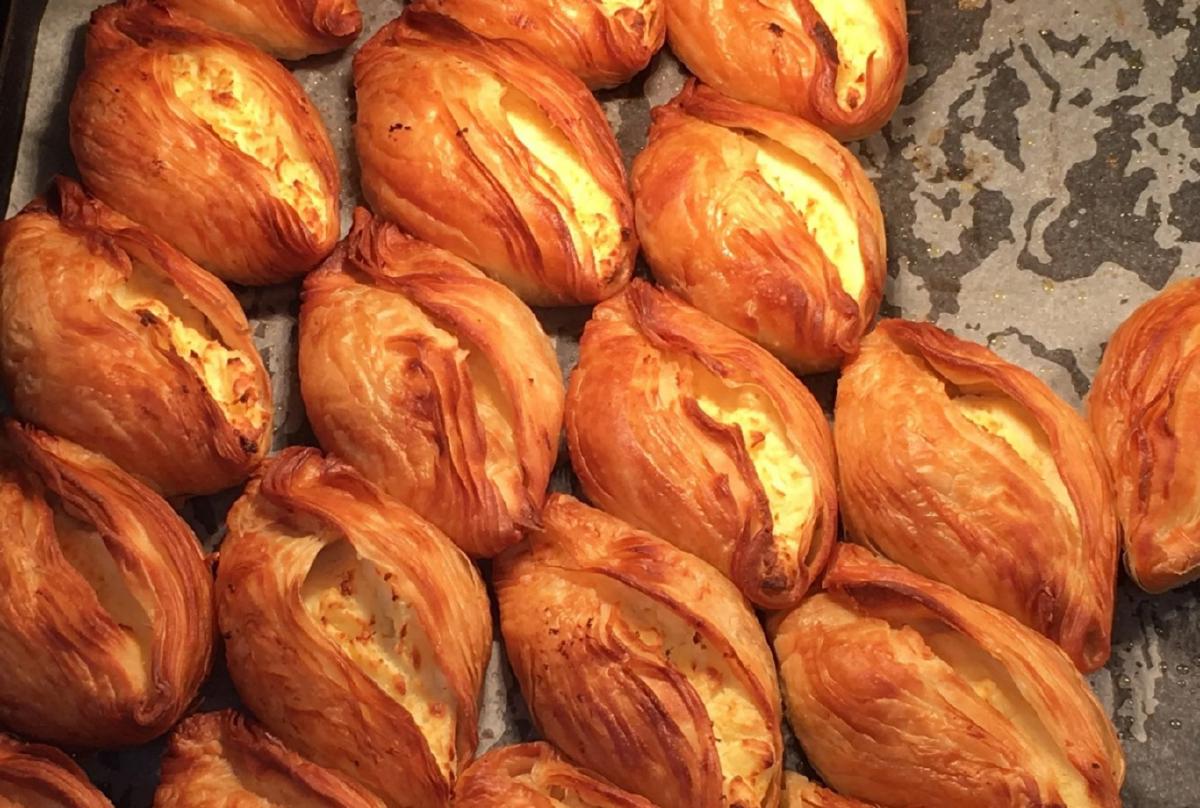
There are food cultures where the best version of the national dish is in a 3-Michelin-star tasting room. There are food cultures where it’s in your aunt’s kitchen. Malta’s national dish — the pastizzo — is firmly in the third category: a 50-cent pastry from a hole in the wall in Rabat, eaten standing up at 09:00 with a coffee, in a queue of construction workers and pensioners.
This is a guide to where to actually find them. Seven places we’d cross the island for, the €0.50 rule, and an honest take on which “Maltese bakery” hotel-zone pastizzi to skip.
For wider Maltese food coverage see traditional Maltese food: 15 dishes and best Malta food tours.
Some links below are affiliate links — they don’t change your price, and they help keep this guide running.
What is a pastizzo, exactly?#
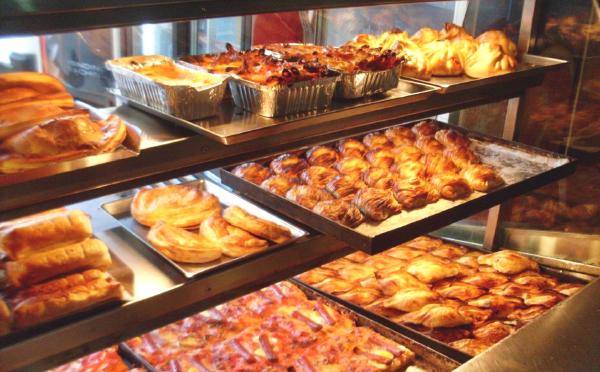
A pastizzo (plural: pastizzi) is a palm-sized, diamond-shaped pastry with layered, flaky dough wrapped around a savoury filling. The two main fillings:
- Tal-irkotta (ricotta) — sheep’s-milk ricotta, salted, often with parsley or mint
- Tal-piżelli (mushy peas) — split peas, curry powder, onion
There are seasonal and regional variants (chicken, beef, anchovy) but ricotta and pea are 95% of what you’ll eat. They cost €0.50 at a working pastizzeria, €0.80–1.20 at a cafe, and €2–3 in tourist-zone Sliema.
A pastizzo is meant to be eaten warm, straight from the oven, with a coffee or a Kinnie. It is not a sit-down meal — it’s the snack that fits a Maltese tradesman’s morning coffee break.
The €0.50 rule#
If you’re paying more than €0.80 for a pastizzo, you’re either at a tourist-zone cafe, a hotel buffet, or an airport kiosk. The pastizzo itself is the same — same dough, same filling, often baked by the same wholesale supplier. The price difference is the rent on the location.
This sounds like a small point until you do the maths: a tourist family eating “two pastizzi each, three times” on a 5-day Malta trip pays €36 at a Sliema seafront cafe and €15 at a Rabat working pastizzeria. The Rabat ones taste better, too — they’re fresher, eaten faster, and come out of a smaller, more frequently-loaded oven.
The lesson: find the local pastizzeria, build a habit, save €20.
Where to actually buy pastizzi#
The seven pastizzeriji we’d send a friend to:
1. Crystal Palace, Rabat — the legend#
The most-name-checked pastizzeria in Malta, and the one that lives up to it. Triq San Pawl, Rabat, just outside Mdina’s Greek’s Gate. Hole-in-the-wall, no seating, cash only, €0.50 a pastizzo, open 24 hours (yes, really — they bake all night).
The clientele tells you everything: construction workers at 06:00, school kids at 07:30, pensioners at 09:00, tourists from 11:00. The line moves in 30 seconds; you point at what’s hot, you pay, you eat standing on the pavement.
Order: two ricotta, two pea, a coffee (~€3.50 for one person, €7 for two). If you’ve come from Mdina via the Greek’s Gate, it’s a 3-minute walk. If you’ve come from anywhere else in Malta, it’s worth the bus.
Verdict: If you only eat pastizzi at one place in Malta, eat them here.
2. Serkin Crystal, Rabat — the rival#
50 metres from Crystal Palace on the same street is Serkin (also called Serkin Crystal to confuse the unwary). Same model — hole-in-the-wall, €0.50 pastizzi, all-day baking — but a different family, slightly different dough recipe, and a smaller, more focused menu. Locals are split. Go to both, decide for yourself.
Order: ricotta, pea, plus one of their chicken pastizzi if available — the rare chicken filling is Serkin’s specialty.
3. Maxim’s, Sliema — the convenient pick#
If you’re staying in Sliema and you don’t want to bus to Rabat at 08:00, Maxim’s on Triq Manwel Dimech (just behind Tigné Point) is the nearest equivalent: €0.55 pastizzi, working pastizzeria, locals’ clientele, baking through the day.
The trade-off: it’s not Crystal Palace. It’s a notch less crisp, a notch saltier on the ricotta. But it’s a 3-minute walk from most Sliema hotels and it’s the right answer for breakfast.
4. Pastizzeria Tal-Lord, Buġibba — the north-coast standard#
For travellers staying in Buġibba, Qawra or Mellieħa, the equivalent local hole-in-the-wall is Tal-Lord (and a couple of similar shops on the same Buġibba block). €0.50 pastizzi, no seating, open from 06:00. Worth knowing about if you’re not making the Rabat trip.
5. Mekren Bakery, Nadur (Gozo) — the Gozitan#
Gozo has its own pastizzi tradition, slightly heavier on cheese and slightly thicker on dough. Mekren Bakery in Nadur is the textbook Gozitan version. €0.55 pastizzi, also famous for Gozitan ftira (the rectangular pizza-bread, see #15 in traditional Maltese food).
If you’re in Gozo, a Nadur stop combining Mekren and Maxokk Bakery (Mekren’s local rival, 200m away) is a 30-minute food detour worth taking.
6. The Crusty Loaf, Mosta — the rural option#
Mosta is the inland town with the giant unsupported dome. The Crusty Loaf on the main square is a working bakery that does excellent pastizzi (€0.55) alongside fresh hobż tal-Malti (Maltese bread). If you’re doing a Mdina + Mosta day, this is the pastizzo stop on the way back.
7. Caffè Cordina, Valletta — the historic compromise#
The exception to the €0.50 rule. Caffè Cordina on Republic Street is the historic Valletta cafe (operating since 1837) and their pastizzi cost €1.20–€1.50 — but they’re served on a plate, with a proper espresso, in a dignified marble-and-wrought-iron interior. If you want the pastizzi-with-civility version, this is it.
Pick this if: you’re doing the Valletta sightseeing day and you’d like a sit-down 20-minute coffee break that delivers a pastizzo as part of the package.
Skip if: you want the €0.50 working-pastizzeria experience. Cordina is great for what it is; it’s not the same dish.
What about Sliema seafront cafes?#
The “Maltese pastizzi” sold at Sliema and St Julian’s seafront cafes for €2–3 each are usually:
- bought wholesale from a Maltese pastizzeria,
- reheated mid-morning,
- marked up 4× the wholesale price.
The pastizzo itself is fine. The price is bad. A 7-minute walk back from the Sliema seafront to Maxim’s saves you 70% on the same pastry.
When to eat pastizzi#
The real answer: whenever they’re warm and fresh, which means as close to a baker putting them out as you can manage. That’s roughly:
- 06:30–09:00 morning rush — first batches of the day, optimal
- 11:30–13:00 lunchtime — second batches, still fresh
- 16:00–18:00 afternoon batch — third batches at busier shops; quality drops at quieter ones
Avoid:
- Hotel breakfast buffets — pastizzi are usually pre-baked, sat under heat lamps for 2 hours, and dried out
- Airport kiosks — overpriced, often hours old
- Sliema seafront after 21:00 — you’re getting reheated leftovers
How many can a person eat?#
Locally:
- 2 pastizzi + coffee = standard breakfast
- 3 pastizzi = a tradesman’s lunch
- 4 pastizzi = a tourist showing off
- 5+ = ill-advised
A dozen pastizzi (€6 at Crystal Palace) is the right take-home order if you’re feeding a family of 4 a casual lunch.
Pastizzi as a souvenir / take-home?#
You can. Crystal Palace will bag you up a dozen for the bus journey home; some travellers freeze them and reheat in Europe. The texture survives but the magic doesn’t quite — pastizzi are best within an hour of baking. Rather than freezing, consider:
- Maltese sea salt (€4–8 a bag from any Gozo grocer)
- Gozitan honey (€8–15 a jar)
- A bottle of Maltese Marsovin or Meridiana wine (€15–25)
These travel better than pastizzi.
Pastizzi-adjacent: qassatat, ross fil-forn, imqaret#
Two cousins worth knowing about, sold at the same shops:
- Qassatat — round, lighter pastry-pies with ricotta, peas, anchovy or sausage filling. Bigger than a pastizzo (~€1 each). Cassata-shaped. Lighter and more pastry-forward.
- Ross fil-forn — baked rice with mince, eggs and tomato. Sold by the slice (~€2.50 a slice) at lunch hours. A working-class lunch staple.
- Imqaret — the dessert cousin: diamond-shaped deep-fried date pastries, sold by the bag (~€1 each) from street stalls outside Valletta City Gate. The right way to end a pastizzi tour.
For a wider sweets and savouries map see traditional Maltese food.
Vegetarian, vegan and dietary notes#
- Ricotta and pea pastizzi are vegetarian.
- Pea pastizzi without dairy vary by baker — most use butter in the dough; check before assuming vegan.
- Gluten-free pastizzi essentially do not exist in Malta. The dough is the dish.
- Dairy allergy: the pea filling is dairy-free, but the dough often has milk or butter. Sticking to peas alone is not a guarantee.
Pastizzi on a Malta itinerary#
Where to slot pastizzi into different trips:
- 3-day trip: Day 2 morning at Maxim’s (Sliema base) or Crystal Palace if you’re doing Mdina. Mid-morning snack on the food tour day if booked.
- 5-day trip: Day 1 morning at the local hole-in-the-wall (whatever’s nearest), Day 3 at Crystal Palace as a Mdina-day lunch, Day 5 at the airport kiosk only as a last resort.
- 7-day trip: Add a Gozo Mekren/Maxokk stop on Day 5, plus an imqaret evening at the Valletta City Gate stalls.
- Layover / 1-day: Caffè Cordina on Republic Street as part of the Valletta culture day. Skip the bus to Rabat unless you’ve got 8+ hours.
For full itineraries see 3 days in Malta, 5 days Malta + Gozo, and 7 days in Malta.
Insider tips#
- Crystal Palace is cash-only. Bring €5 in coins; the queue moves fast and breaking a €20 slows everyone down.
- The pea pastizzi at Crystal Palace are slightly less famous than the ricotta but equally good. Try one of each.
- Pastizzi are best eaten while still slightly too hot to comfortably hold. That’s the moment.
- Don’t bag them and walk for 20 minutes. Steam softens the pastry. Eat where you buy.
- The Crystal Palace queue at 08:30 on a Sunday is faster than at 11:00 on a weekday — locals do a Sunday-morning rotation through.
- Maxim’s in Sliema closes earlier (~19:00) than Crystal Palace (24h). Plan accordingly.
- Order a Kinnie alongside, just once, for the Maltese-cliché photo. The bitter-orange soft drink is half the point of a pastizzi-and-Kinnie cultural moment.
Common mistakes#
- Buying pastizzi at a Sliema seafront cafe at €2.50 each. A 7-minute walk to Maxim’s saves you 70%.
- Skipping pastizzi entirely because you “don’t like savoury pastry.” The ricotta version is mild and salty rather than oily; the pea is curry-warm rather than heavy. They’re worth a try even if you’re sceptical.
- Eating pastizzi at the hotel buffet. Reheated, stale, overcrowded. Skip.
- Buying a dozen at the airport. Airport pastizzi are 2× the price and 3× the age. Stop at Maxim’s on the way to MLA instead.
- Asking for a “spinach pastizzo”. Not a thing in Malta. (Qassatat sometimes has anchovy or sausage fillings; pastizzi are ricotta or pea, with rare seasonal extras.)
- Confusing pastizzi with pastels (the Goan/Portuguese fried pastries — different dish, different culture).
- Refrigerating pastizzi for the next day. They go limp. Eat them fresh, or accept that day-two pastizzi are a different (lesser) dish.
FAQ#
What is the best pastizzi shop in Malta?#
Crystal Palace in Rabat is the consensus pick — €0.50 pastizzi, open 24 hours, locals’ clientele. Serkin (next door) is the local rival with a slightly different recipe. Both are worth visiting if you’re in Rabat.
How much does a pastizzo cost in Malta?#
€0.50 at a working pastizzeria (Crystal Palace, Serkin, Maxim’s, Tal-Lord). €0.80–1.50 at cafes. €2–3 at tourist-zone Sliema/St Julian’s seafront cafes — overpriced for the same product.
What’s the difference between pastizzi and qassatat?#
Pastizzi are diamond-shaped, layered, flaky, and small (€0.50). Qassatat are round, larger, with shorter pastry, and more substantial (€1 each). Both come with ricotta, pea, anchovy or sausage fillings. Pastizzi are the snack; qassatat are closer to a small pie.
Are pastizzi vegetarian?#
Ricotta and pea pastizzi are vegetarian. Vegan availability is limited — the dough usually contains butter. Gluten-free pastizzi are essentially non-existent in Malta.
When is the best time of day for pastizzi?#
Morning, 06:30–09:00, when the first batches come out of the oven. Lunchtime (11:30–13:00) is the second-best window. Avoid late evenings and hotel buffets.
Are pastizzi healthy?#
No, in the sense that flaky pastry with cheese filling isn’t a health food. A pastizzo is roughly 180–220 calories, mostly from butter and cheese. Two pastizzi = a substantial breakfast; four pastizzi = a meal. Treat them as the snack they are.
Can I get pastizzi outside Malta?#
Pastizzi-style pastries appear in Maltese-diaspora communities — Sydney, Melbourne, Toronto, London. They’re rarely as good as the originals, partly because the wholesale ricotta is different and partly because the diaspora tradition has drifted. The genuine version is in Malta.
What’s the perfect pastizzi-and-coffee order?#
At Crystal Palace or Serkin: two ricotta, two pea, a small espresso, a Kinnie. ~€4.50 total. The complete Maltese morning experience.
Should I take a pastizzi tour?#
A guided Valletta food walking tour includes pastizzi as one stop among 5–8 (see best Malta food tours). For the deeper pastizzi experience, the DIY version — bus to Rabat, Crystal Palace, Serkin, walk to Mdina — is genuinely better and costs €4 of pastizzi instead of €60 of tour.
Are pastizzi gluten-free anywhere in Malta?#
No. The flaky pastry is the dish; making it gluten-free is essentially making a different food. A few Sliema modern cafes have attempted GF versions and the result has not been widely accepted.
Last verified: April 2026. Pastizzi shop hours and prices change — confirm before crossing the island for breakfast.