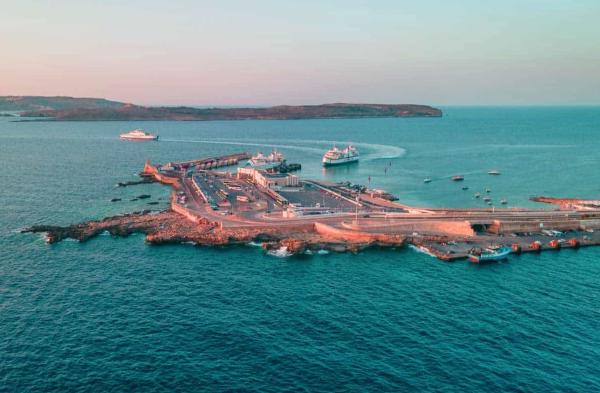
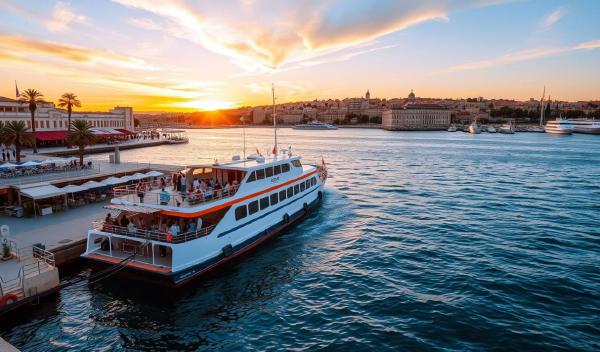
ℹ️ Short answer: The Gozo Channel ferry from Ċirkewwa (Malta) to Mġarr (Gozo) runs every 30–45 minutes in summer, takes 25 minutes, costs €4.65 return as a foot passenger (paid only on the way back from Gozo) and €15.70 return with a car. No advance booking — show up and pay. There’s also a Valletta fast ferry to Mġarr (45 minutes, €7.50 single) that saves the bus to Ċirkewwa if you’re staying in Valletta. Avoid Friday afternoons and Sunday evenings — car queues hit 90+ minutes. The ferry to Gozo is the smoothest piece of public transport in Malta, which is faint praise but accurate. Two boats, a 25-minute crossing, no booking, pay on the way back, and you’re on the second island. The whole system has run roughly the same way for decades and works because of it.
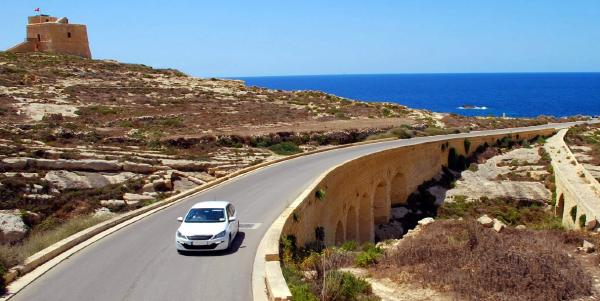
ℹ️ Short answer: A rental car in Malta is worth it for 3–4 days, not 7. Pick it up when you leave the Sliema/Valletta area for Mdina, Dingli, the south coast and Gozo; skip it for the city days when buses, ferries and walking are faster. Expect €25–45/day for an economy car in shoulder season, plus €20–30/day in summer surcharges and parking-anxiety. Driving is on the left, the roads are narrow, and Maltese drivers are creatively assertive — but it’s manageable for any confident driver who’s done a 30-minute orientation lap. There’s a question every Malta visitor eventually asks: do I rent a car or not? The internet is split. Forums say “absolutely necessary.” Bloggers say “Malta is too small, just take the bus.” Both are wrong, because the right answer is “depends which days.” Malta is small enough that you can do Valletta, Sliema and Mdina without a car, and big enough that Gozo, the south coast and Comino-side beaches are noticeably better with one. The trick is renting for the days that need it and not the days that don’t.
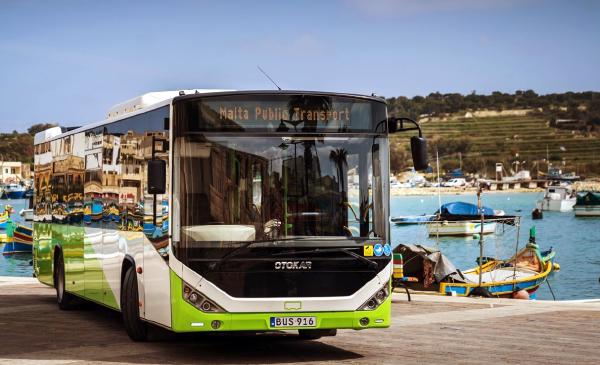
ℹ️ Short answer: Malta’s public bus is run by Tallinja (Malta Public Transport). A single ride is €2.50 in summer (15 June – 15 October) or €1.50 in winter, valid for 2 hours including transfers. If you’re staying 4+ days, buy a Tallinja Explore Card (€21 for 7 days, unlimited rides) at the airport or Valletta terminus. Download the official Tallinja app for live tracking. Hail the bus like a taxi when you see it coming, or it’ll drive past you. The 222 in summer is genuinely cursed — take a Bolt instead if you’re going to Ċirkewwa. The Maltese bus network is the best transport bargain in the Mediterranean and one of the more confusing to use on Day 1. The fares change with the season, the cards have four different versions, the app is good but buried under a website that looks like 2014, and the buses themselves do not stop at stops unless you flag them down. Once you’ve got the rhythm, it’s brilliant. The first 24 hours are a learning curve.
ℹ️ Short answer: From Malta International Airport (MLA, Luqa) you’ve got four sensible options for getting to Valletta, Sliema or St Julian’s. The cheapest is the Tallinja X-bus (€2.50 summer / €1.50 winter, 25–45 min). The fastest with luggage is Bolt or eCabs (€15–22, ~20 min). The least stressful at 1am with kids is a pre-booked private transfer (€25–40, driver waits at arrivals with your name). Skip the rental car for at least your first day — Valletta and Sliema are not where you want to learn Maltese parking. Malta International Airport sits in Luqa, about 8 km south of Valletta, 10 km from Sliema and 12 km from St Julian’s. The whole island is small enough that no transfer takes more than 45 minutes, but the right transfer depends entirely on what time you land, how much luggage you’ve got, and whether you’ve already had three espressos or zero hours of sleep.
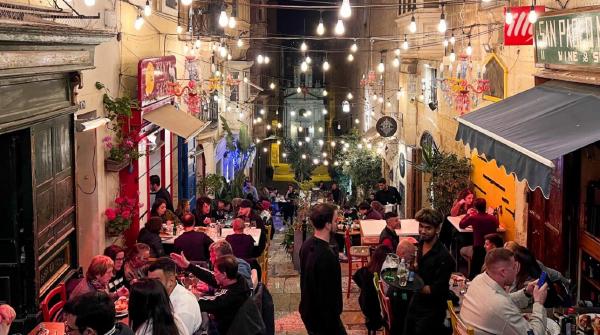
ℹ️ Short answer: For most first-timers, a 3-hour Valletta food walking tour (€55–70) is the right single-tour pick — pastizzi, ftira, bigilla, Maltese wine, and a sweet stop in one organised loop. Cooking classes (€85–110) are the best second food experience if you’d rather make than eat. Sunday Marsaxlokk fish-market tours are the niche pick if your trip lands on a Sunday and you like seafood. The DIY version of any food tour is genuinely good and roughly half the price — but you lose the context, and Maltese food without context is just sandwiches. Maltese food is one of the surprises of a first Malta trip. People come for the limestone and the sea and end up texting friends about a 50-cent pastizzo from a Rabat hole-in-the-wall. The cuisine itself is a 5,000-year old layer cake — Phoenician fish, Arab spices, Sicilian pasta, Norman bread, North African pulses, British pies, Italian everything-since-1530 — and unlike the architecture, it doesn’t survive walking past it. You have to eat it.
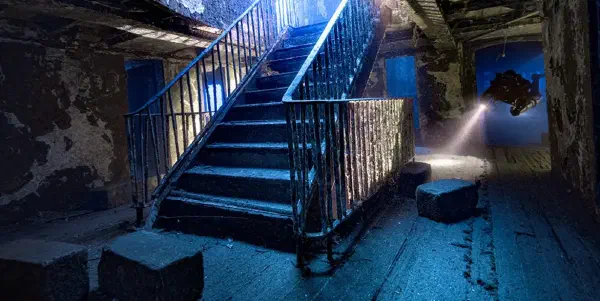
ℹ️ Short answer: Malta is one of the best Mediterranean dive destinations — clear water (visibility 20–40m), warm summer sea, no currents most days, and a stack of WWII-and-later wrecks at recreational depths. Beginners should book a PADI Discover Scuba half-day at Ċirkewwa (~€80–110). Certified divers want the Um El Faroud, P29 patrol boat, HMS Maori, and the Blue Hole at Dwejra (Gozo). The best season is June–October; spring water is clearer but cold. Twin-tank boat dives run €80–120; full Open Water certifications are €450–550. Malta has a quietly strong reputation in European diving. Visibility is reliably 20–40 metres in summer, the sea between Malta, Gozo and Comino is sheltered enough that conditions are diveable 300+ days a year, and the rate of wrecks-per-square-kilometre is one of the highest in the Mediterranean — Malta has been at the receiving end of every major Mediterranean naval war for the last 2,500 years, and a few of the casualties got scuttled deliberately as artificial reefs.
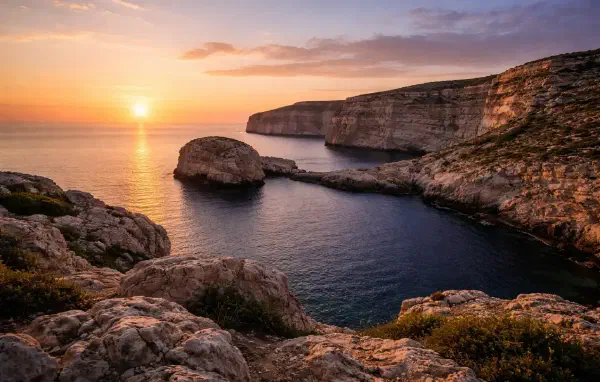
ℹ️ Short answer: For most couples and small groups, a 2.5-hour small-group sailing yacht sunset cruise from Sliema (€55–75) is the best pick — less hen-party energy than the big catamarans, more atmosphere than a RIB, with proper drinks and a real sail. Big catamarans (€35–50) are fine if you’re a group of friends who want a party deck and an open bar. Grand Harbour sunset cruises (€25–40) are the cheap, short, photogenic option and the right pick if you only have one evening. Skip private charters under 6 people — the per-person maths doesn’t work. The Maltese sunset is the easiest “wow” in your trip. The whole western coast is limestone cliff and bastion wall, the sun sinks straight into the sea between Comino and Gozo, and on a clear July evening you’ll watch a thousand-year-old skyline turn pink for forty minutes. You can see it from the Upper Barrakka Gardens for free, and you should at least once. But the boat-borne version — drink in hand, Comino on the horizon, Valletta lit up behind you — is one of those tourist clichés that earns its cliché status.
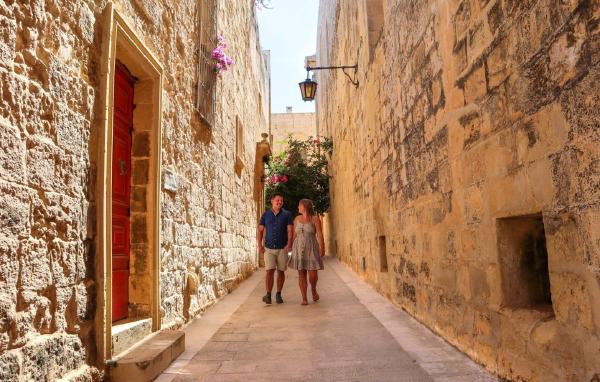
ℹ️ Short answer: For most first-timers, a half-day Mdina + Rabat combo tour from Valletta (€35–45, ~5 hours) is the best single pick — it includes transport, both towns, the catacombs in Rabat, and a guide who can actually tell you the difference between a Knight and a noble. The Mdina night tour (€35) is atmospheric and worth a second visit if you have an extra evening. Game of Thrones fans should book the Mdina + Valletta filming combo. DIY by bus 51/52/53 from Valletta works fine and saves €25 if you don’t need a guide. Mdina is small. About 0.9 km² of bastioned hilltop, 250 residents, three cafes that matter, and a baroque cathedral that punches above its weight. You can walk the whole thing in 25 minutes. Which raises an obvious question: do you actually need a tour? Honest answer: yes, because Mdina without context is just pretty buildings. Mdina with context — Phoenician origins, Norman conquest, the Knights moving the capital out, the Borg family killing each other in the cathedral, the GoT crew filming Ned Stark’s arrival — is the most interesting square kilometre on Malta. A guide is what makes the difference.
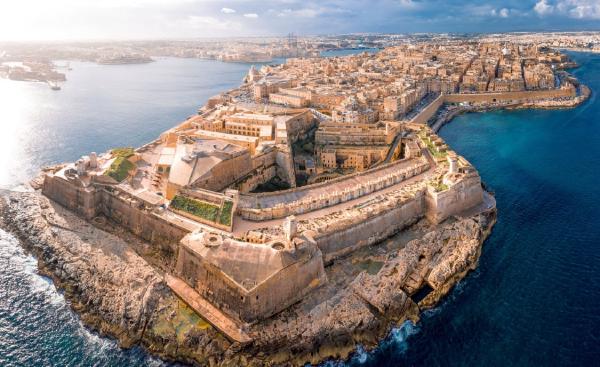
ℹ️ Short answer: For most first-timers, a 2.5-hour paid small-group walking tour (€25–35) is the best single-tour pick — it covers St John’s Co-Cathedral, the Barrakka Gardens, the Knights of St John backstory, and the bits of context that turn “old building” into “ah, so that’s why”. Free tip-based tours are genuinely good and can save you €20 if you’re on a budget. Skip private tours unless you’re 4+ people. The food tour is the one to add as a second tour. Self-guided with an audio app works if you want to move at your own pace. Valletta is small — about 1 km long and 600 m wide — and you can cross it end-to-end in 25 minutes. Which means you don’t need a tour to see it. You need a tour to understand it. Most of what makes Valletta special isn’t the surface (although the surface is gorgeous); it’s the layered history of the Knights of St John, the Great Siege, the British Empire, the WWII Blitz that made it the most-bombed city on earth, and the fact that the whole walled grid was master-planned in the 1500s by an Italian engineer with a thing for grids.
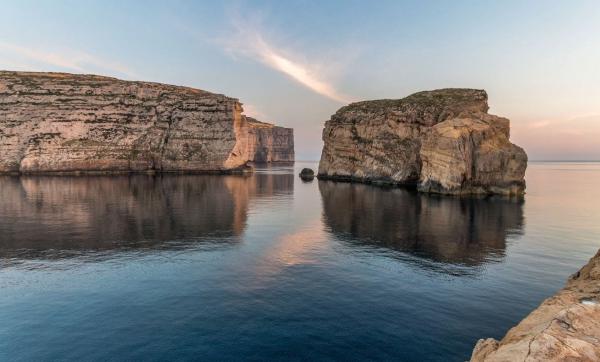
ℹ️ Short answer: The best Gozo day trip from Malta in 2026 is a small-group jeep tour from Mellieħa or Sliema (€75–95), which covers Dwejra, Tal-Mixta Cave, Ramla Bay, the Citadel, and a Gozitan lunch in one tightly-run day. The cheapest is DIY by ferry and bus (~€20 round trip including transport), the most fun in good weather is a quad-bike self-drive (€100/quad), and the laziest is the coach + Citadel + lunch combo (€55–70). The best advice we can give: if you can possibly stretch to two nights on Gozo, do that instead — see our 5-day Malta and Gozo itinerary for why. Gozo is the second-largest of the Maltese islands and, in the opinion of every Gozitan and most second-time visitors, the better one. Half the population per square kilometre, almost no traffic, red-sand beaches, the cliffs at Dwejra, the medieval Citadel of Victoria, dinners that don’t end at 22:00. The catch: Gozo doesn’t fit in a day. The bus-and-ferry chain alone costs you 90 minutes each way, and the headline sights are spread across an island that’s 14 km tip to tip.
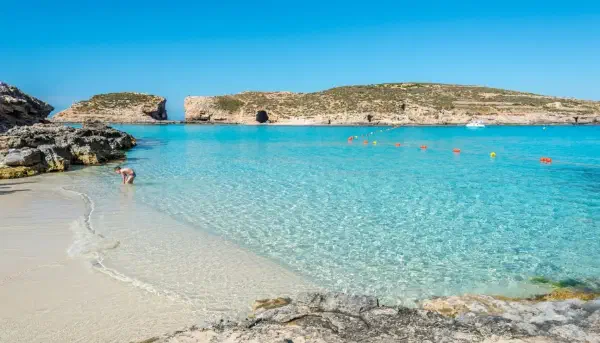
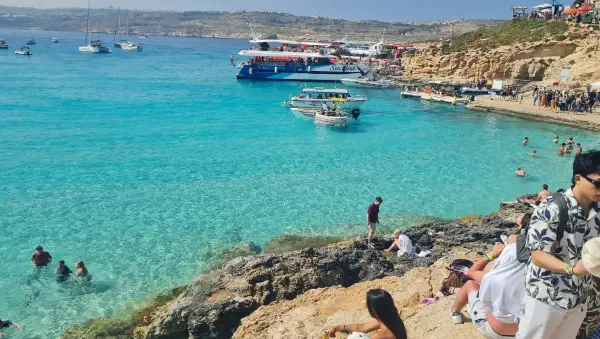
ℹ️ Short answer: The cheapest way to the Blue Lagoon is the Comino shuttle ferry from Ċirkewwa (~€15 round trip, runs every 30 minutes in summer). The most popular way is a full-day cruise from Sliema that adds the Crystal Lagoon, Gozo’s caves, and lunch (€35–45). The most enjoyable way — if you can spend €60–90 — is a small-group catamaran or RIB that arrives early or late and skips the worst of the midday crush. Whichever you choose, avoid 11:30–14:00 in July and August — the Lagoon is unrecognisable from the brochure photos at that hour. The Blue Lagoon — the impossibly turquoise channel between Comino and the tiny islet of Cominotto — is the photo every Malta brochure leads with, and it deserves the hype. The water really is that colour. The catch is that 6,000+ people a day arrive in the high season, almost all of them on the same big boats, almost all in the same three-hour window. Get the timing wrong and you’re elbowing toward a swim spot in water the colour of swimming-pool chemicals. Get it right and you’re floating in something genuinely surreal.
ℹ️ Short answer: The single best-value tour in Malta is the full-day Comino + Gozo + caves boat cruise from Sliema (€35–45) — it covers the Blue Lagoon, the most photographed coastline on the island, and Gozo all in one day. Pair it with a Valletta walking tour (€20–35) for context on the city’s history and you’ve covered 80% of what most people come to Malta for. Below are 11 tours we’d actually book — sorted by who they’re for, with the trade-offs we’d want a friend to flag for us. There’s a tour for every square kilometre of Malta and a tout for every restaurant in Sliema. The trick isn’t finding tours — it’s finding the right one for the trip you’re actually trying to have. A first-timer with three days needs different tours than a returning diver, a family with two kids, or a couple celebrating an anniversary.