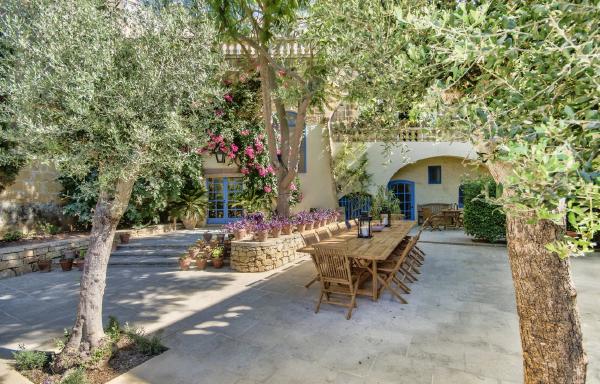
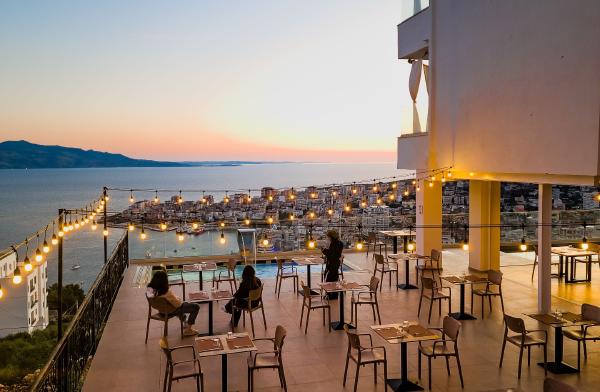
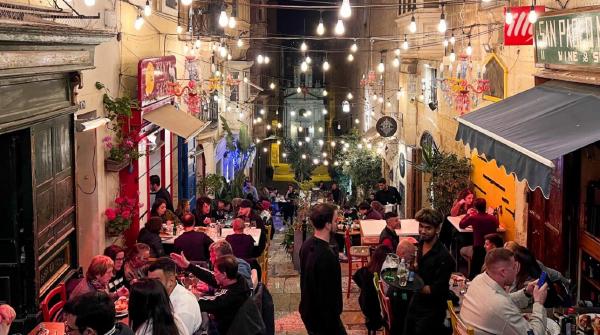
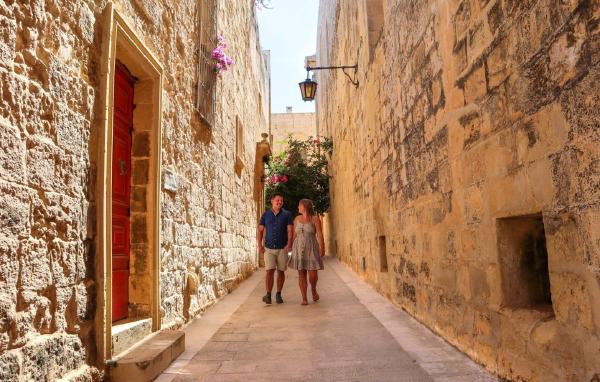
ℹ️ Short answer: Mdina has only a handful of in-walls hotels (the Silent City has 250 residents, not 25,000), and The Xara Palace is the headline luxury pick. Just outside the walls in Rabat, Casa Melita and several smaller boutique guesthouses run at lower rates. Gozo is the boutique-and-farmhouse heaven — Cesca Boutique Hotel and Quaint Sannat lead the boutique pack, while traditional Gozitan farmhouses for whole-house rentals (€120–300/night, sleeping 4–8) are one of the best lodging experiences in the Mediterranean. Book 8–12 weeks ahead for summer. Mdina and Gozo are the two parts of the Maltese islands that reward slowing down. Both have boutique-hotel scenes that have grown quietly over the last decade — Mdina because the in-walls building stock is finite (so the conversions get serious treatment), Gozo because rural farmhouses became the Airbnb-and-boutique-hotel rehab project of the 2010s. The result: in Mdina you can sleep in a 17th-century palace overlooking the bastion walls, and in Gozo you can sleep in a converted three-century-old farmhouse with its own pool and a 360° view of nothing but limestone fields and church domes.
ℹ️ Short answer: For most first-timers staying 3–7 days without a car, Sliema is the right base — it’s mid-priced, has the ferry to Valletta, the boat departures for Comino, and a thousand restaurants. Pick Valletta if you want to be inside the postcard and you’re OK paying 30–40% more for a smaller room. Mellieħa wins for families who want a beach. Mdina or Three Cities (Birgu) wins for a quieter, more romantic stay. Paceville is for nightlife only — avoid otherwise. Skip Buġibba unless your priority is a budget package deal. Malta is small — 27 km long — so wherever you stay, you can reach the rest of the island in under an hour. That sounds liberating until you realise it means every hotel claims it’s “perfectly located,” and the actual differences between neighbourhoods are about vibe, transport convenience, and price-per-square-foot rather than distance to the sights.
ℹ️ Short answer: For most first-timers, a 3-hour Valletta food walking tour (€55–70) is the right single-tour pick — pastizzi, ftira, bigilla, Maltese wine, and a sweet stop in one organised loop. Cooking classes (€85–110) are the best second food experience if you’d rather make than eat. Sunday Marsaxlokk fish-market tours are the niche pick if your trip lands on a Sunday and you like seafood. The DIY version of any food tour is genuinely good and roughly half the price — but you lose the context, and Maltese food without context is just sandwiches. Maltese food is one of the surprises of a first Malta trip. People come for the limestone and the sea and end up texting friends about a 50-cent pastizzo from a Rabat hole-in-the-wall. The cuisine itself is a 5,000-year old layer cake — Phoenician fish, Arab spices, Sicilian pasta, Norman bread, North African pulses, British pies, Italian everything-since-1530 — and unlike the architecture, it doesn’t survive walking past it. You have to eat it.
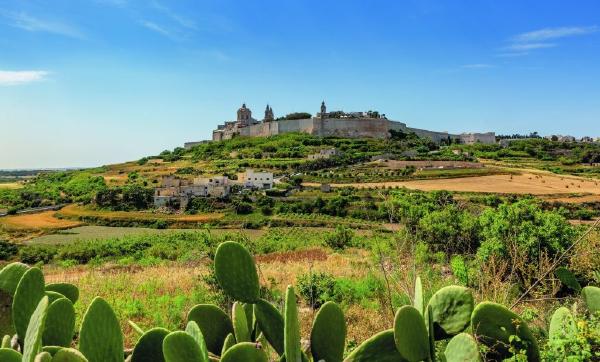
ℹ️ Short answer: For most first-timers, a half-day Mdina + Rabat combo tour from Valletta (€35–45, ~5 hours) is the best single pick — it includes transport, both towns, the catacombs in Rabat, and a guide who can actually tell you the difference between a Knight and a noble. The Mdina night tour (€35) is atmospheric and worth a second visit if you have an extra evening. Game of Thrones fans should book the Mdina + Valletta filming combo. DIY by bus 51/52/53 from Valletta works fine and saves €25 if you don’t need a guide. Mdina is small. About 0.9 km² of bastioned hilltop, 250 residents, three cafes that matter, and a baroque cathedral that punches above its weight. You can walk the whole thing in 25 minutes. Which raises an obvious question: do you actually need a tour? Honest answer: yes, because Mdina without context is just pretty buildings. Mdina with context — Phoenician origins, Norman conquest, the Knights moving the capital out, the Borg family killing each other in the cathedral, the GoT crew filming Ned Stark’s arrival — is the most interesting square kilometre on Malta. A guide is what makes the difference.
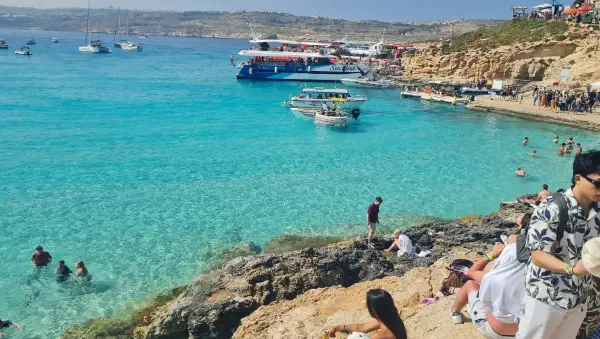
ℹ️ Short answer: The single best-value tour in Malta is the full-day Comino + Gozo + caves boat cruise from Sliema (€35–45) — it covers the Blue Lagoon, the most photographed coastline on the island, and Gozo all in one day. Pair it with a Valletta walking tour (€20–35) for context on the city’s history and you’ve covered 80% of what most people come to Malta for. Below are 11 tours we’d actually book — sorted by who they’re for, with the trade-offs we’d want a friend to flag for us. There’s a tour for every square kilometre of Malta and a tout for every restaurant in Sliema. The trick isn’t finding tours — it’s finding the right one for the trip you’re actually trying to have. A first-timer with three days needs different tours than a returning diver, a family with two kids, or a couple celebrating an anniversary.
ℹ️ Short answer: Five days is the sweet spot for Malta and Gozo together — three nights on Malta (Valletta or Sliema), two nights on Gozo. Day 1 Valletta and the Three Cities, Day 2 Mdina and the south coast, Day 3 ferry to Gozo with a slow afternoon, Day 4 Gozo’s coast and the Citadel, Day 5 Comino’s Blue Lagoon on your way back. You’ll see the highlight reel without rushing, and Gozo gets the time it actually deserves rather than a frantic day trip. Most Malta-and-Gozo itineraries make the same mistake: they squeeze Gozo into a single 8-hour day-trip and then wonder why it didn’t feel like much. Gozo’s whole pitch is that it runs at a different speed — half the population per square kilometre, no traffic to speak of, dinners that finish when they finish. You don’t fix that with a coach tour. You fix it by sleeping there.
ℹ️ Short answer: Three days in Malta is enough to do Valletta on foot, take a Comino + Gozo boat tour, and wander Mdina at sunset — without renting a car. Base yourself in Sliema, ferry to Valletta on Day 1, book a full-day boat trip on Day 2, and bus out to Mdina + the south on Day 3. Buses are cheap (€2.50 in summer), the Sliema–Valletta ferry is the best €1.50 you’ll spend, and the only thing you need to book in advance is the Comino boat. Malta packs more into 316 square kilometres than most countries fit into a province. A UNESCO capital, prehistoric temples older than the pyramids, a flooded sea cave the colour of pool-cleaner blue, and a sister island that still feels like 1995 — and you can do the whole core run in three days without ever sitting behind a steering wheel. We’ve planned and re-planned this trip enough times to have opinions about which bus to skip in August (the 222), which ferry is worth the €1.50 (all of them), and which “must-see” you can probably miss if you’re tight on time.