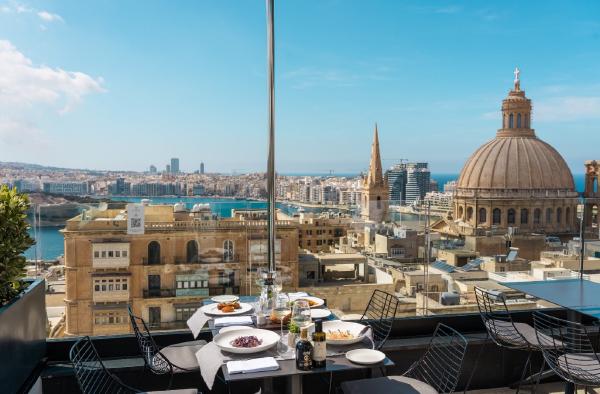
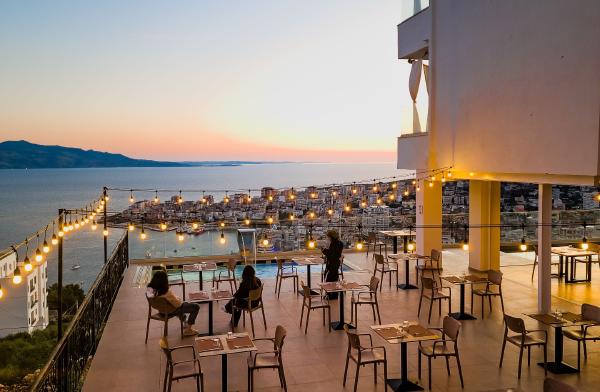
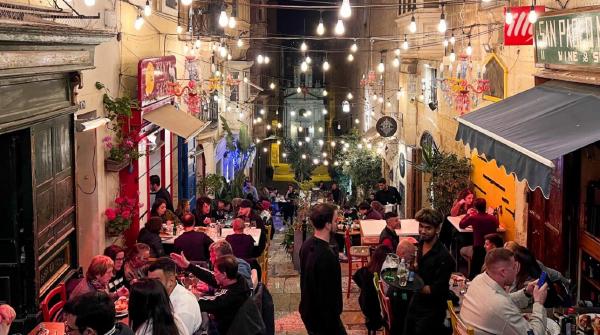
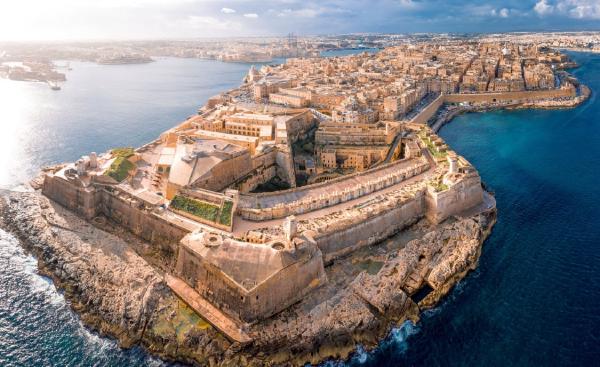
ℹ️ Short answer: For most first-timers, Legligin for slow Maltese tasting (€35–55pp), Trabuxu Wine Bar for small plates and Maltese wine, and Nenu the Artisan Baker for a proper ftira lunch are the three Valletta restaurants worth booking. Noni and Caviar & Bull are the fine-dining picks (€80–130pp). Strait Street is where most evening eating happens; Republic Street is where the historic cafes live. Skip hotel-restaurant generic Mediterranean — Valletta is small enough that the working restaurants are 5 minutes from anywhere. Valletta is small. About 1km long and 600m wide, with maybe 80 restaurants and another 50 cafes and bars packed in between. The good news: the best ones are mostly local, mostly affordable, and walkable to from any Valletta hotel. The bad news: there are a fair number of “international Mediterranean” tourist traps with English menus on Republic Street that will sell you a €22 spaghetti carbonara that lives in a microwaveable form. This guide picks the restaurants that are worth your evening, broken down by what kind of meal you actually want.
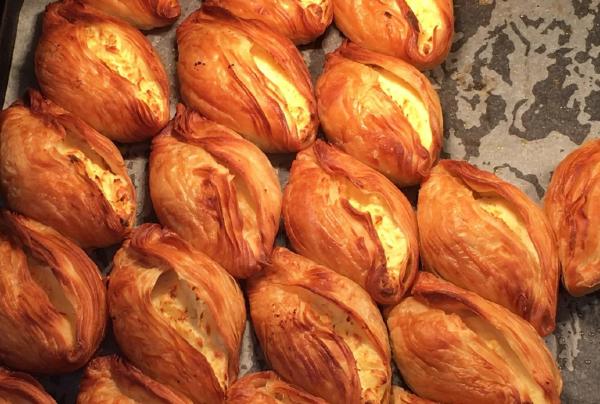
ℹ️ Short answer: The best pastizzi in Malta cost €0.50 each, are sold from holes-in-the-wall with no seating, and are best eaten at 09:00 standing up with a coffee. Crystal Palace in Rabat is the legendary one. Serkin (Crystal Palace’s neighbour, also Rabat) is the local rival. Maxim’s in Sliema is the convenient city pick. Pastizzeria Tal-Lord (Buġibba) is the north-coast classic. Anything sold for over €1 in a tourist-zone cafe is overpriced — the same pastizzo costs €0.50 a 5-minute walk away. There are food cultures where the best version of the national dish is in a 3-Michelin-star tasting room. There are food cultures where it’s in your aunt’s kitchen. Malta’s national dish — the pastizzo — is firmly in the third category: a 50-cent pastry from a hole in the wall in Rabat, eaten standing up at 09:00 with a coffee, in a queue of construction workers and pensioners.
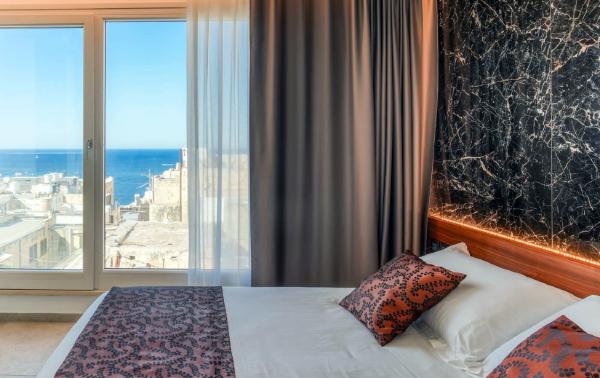
ℹ️ Short answer: Valletta has gone from “no real hotels” to one of the best small-city hotel scenes in the Mediterranean in 10 years. The Phoenicia (just outside City Gate) is the grand classic; Iniala Harbour House is the modern luxury benchmark; Casa Ellul is the small-boutique sweet spot; and The Saint John Boutique Hotel sits in the mid-range range under €200/night. Skip Republic Street if you want quiet — the side streets like Old Bakery, Old Theatre and Strait Street have the same access without the foot-traffic noise. Book 8–12 weeks ahead for summer. Until about 2014, Valletta had two hotels and not much in between. Then the city got serious — UNESCO money, a tourism push around being European Capital of Culture 2018, and a slew of disused palazzos that property developers realised could be 8-room boutique hotels with rooftop terraces. Now there are 50+ hotels in Valletta proper, and the small-luxury scene is one of the most interesting in southern Europe.
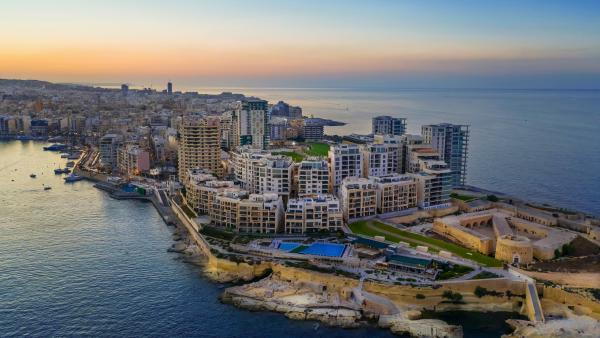
ℹ️ Short answer: For most first-timers staying 3–7 days without a car, Sliema is the right base — it’s mid-priced, has the ferry to Valletta, the boat departures for Comino, and a thousand restaurants. Pick Valletta if you want to be inside the postcard and you’re OK paying 30–40% more for a smaller room. Mellieħa wins for families who want a beach. Mdina or Three Cities (Birgu) wins for a quieter, more romantic stay. Paceville is for nightlife only — avoid otherwise. Skip Buġibba unless your priority is a budget package deal. Malta is small — 27 km long — so wherever you stay, you can reach the rest of the island in under an hour. That sounds liberating until you realise it means every hotel claims it’s “perfectly located,” and the actual differences between neighbourhoods are about vibe, transport convenience, and price-per-square-foot rather than distance to the sights.
ℹ️ Short answer: From Malta International Airport (MLA, Luqa) you’ve got four sensible options for getting to Valletta, Sliema or St Julian’s. The cheapest is the Tallinja X-bus (€2.50 summer / €1.50 winter, 25–45 min). The fastest with luggage is Bolt or eCabs (€15–22, ~20 min). The least stressful at 1am with kids is a pre-booked private transfer (€25–40, driver waits at arrivals with your name). Skip the rental car for at least your first day — Valletta and Sliema are not where you want to learn Maltese parking. Malta International Airport sits in Luqa, about 8 km south of Valletta, 10 km from Sliema and 12 km from St Julian’s. The whole island is small enough that no transfer takes more than 45 minutes, but the right transfer depends entirely on what time you land, how much luggage you’ve got, and whether you’ve already had three espressos or zero hours of sleep.
ℹ️ Short answer: For most first-timers, a 3-hour Valletta food walking tour (€55–70) is the right single-tour pick — pastizzi, ftira, bigilla, Maltese wine, and a sweet stop in one organised loop. Cooking classes (€85–110) are the best second food experience if you’d rather make than eat. Sunday Marsaxlokk fish-market tours are the niche pick if your trip lands on a Sunday and you like seafood. The DIY version of any food tour is genuinely good and roughly half the price — but you lose the context, and Maltese food without context is just sandwiches. Maltese food is one of the surprises of a first Malta trip. People come for the limestone and the sea and end up texting friends about a 50-cent pastizzo from a Rabat hole-in-the-wall. The cuisine itself is a 5,000-year old layer cake — Phoenician fish, Arab spices, Sicilian pasta, Norman bread, North African pulses, British pies, Italian everything-since-1530 — and unlike the architecture, it doesn’t survive walking past it. You have to eat it.
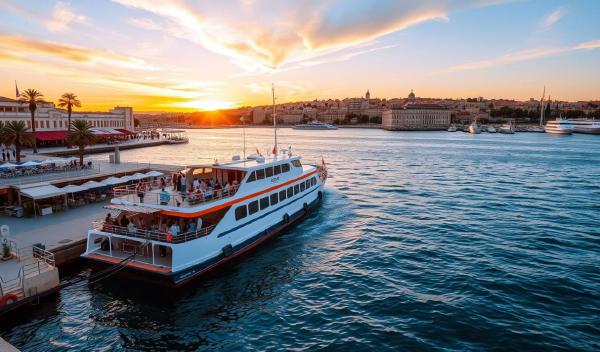
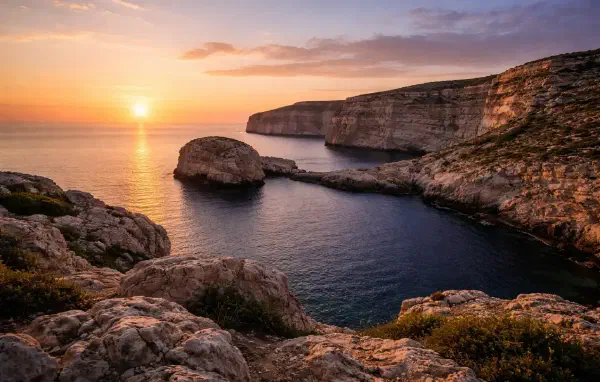
ℹ️ Short answer: For most couples and small groups, a 2.5-hour small-group sailing yacht sunset cruise from Sliema (€55–75) is the best pick — less hen-party energy than the big catamarans, more atmosphere than a RIB, with proper drinks and a real sail. Big catamarans (€35–50) are fine if you’re a group of friends who want a party deck and an open bar. Grand Harbour sunset cruises (€25–40) are the cheap, short, photogenic option and the right pick if you only have one evening. Skip private charters under 6 people — the per-person maths doesn’t work. The Maltese sunset is the easiest “wow” in your trip. The whole western coast is limestone cliff and bastion wall, the sun sinks straight into the sea between Comino and Gozo, and on a clear July evening you’ll watch a thousand-year-old skyline turn pink for forty minutes. You can see it from the Upper Barrakka Gardens for free, and you should at least once. But the boat-borne version — drink in hand, Comino on the horizon, Valletta lit up behind you — is one of those tourist clichés that earns its cliché status.
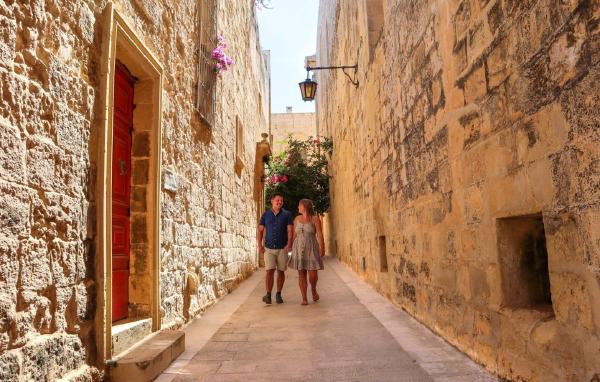
ℹ️ Short answer: For most first-timers, a half-day Mdina + Rabat combo tour from Valletta (€35–45, ~5 hours) is the best single pick — it includes transport, both towns, the catacombs in Rabat, and a guide who can actually tell you the difference between a Knight and a noble. The Mdina night tour (€35) is atmospheric and worth a second visit if you have an extra evening. Game of Thrones fans should book the Mdina + Valletta filming combo. DIY by bus 51/52/53 from Valletta works fine and saves €25 if you don’t need a guide. Mdina is small. About 0.9 km² of bastioned hilltop, 250 residents, three cafes that matter, and a baroque cathedral that punches above its weight. You can walk the whole thing in 25 minutes. Which raises an obvious question: do you actually need a tour? Honest answer: yes, because Mdina without context is just pretty buildings. Mdina with context — Phoenician origins, Norman conquest, the Knights moving the capital out, the Borg family killing each other in the cathedral, the GoT crew filming Ned Stark’s arrival — is the most interesting square kilometre on Malta. A guide is what makes the difference.
ℹ️ Short answer: For most first-timers, a 2.5-hour paid small-group walking tour (€25–35) is the best single-tour pick — it covers St John’s Co-Cathedral, the Barrakka Gardens, the Knights of St John backstory, and the bits of context that turn “old building” into “ah, so that’s why”. Free tip-based tours are genuinely good and can save you €20 if you’re on a budget. Skip private tours unless you’re 4+ people. The food tour is the one to add as a second tour. Self-guided with an audio app works if you want to move at your own pace. Valletta is small — about 1 km long and 600 m wide — and you can cross it end-to-end in 25 minutes. Which means you don’t need a tour to see it. You need a tour to understand it. Most of what makes Valletta special isn’t the surface (although the surface is gorgeous); it’s the layered history of the Knights of St John, the Great Siege, the British Empire, the WWII Blitz that made it the most-bombed city on earth, and the fact that the whole walled grid was master-planned in the 1500s by an Italian engineer with a thing for grids.
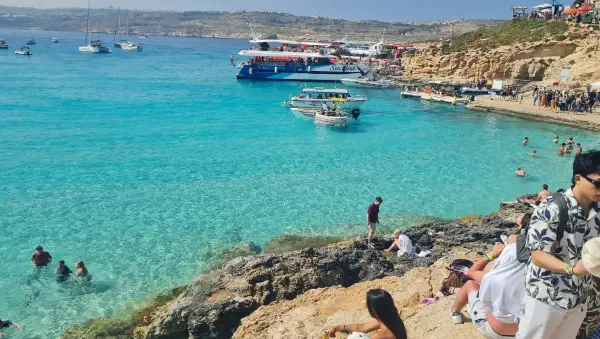
ℹ️ Short answer: The single best-value tour in Malta is the full-day Comino + Gozo + caves boat cruise from Sliema (€35–45) — it covers the Blue Lagoon, the most photographed coastline on the island, and Gozo all in one day. Pair it with a Valletta walking tour (€20–35) for context on the city’s history and you’ve covered 80% of what most people come to Malta for. Below are 11 tours we’d actually book — sorted by who they’re for, with the trade-offs we’d want a friend to flag for us. There’s a tour for every square kilometre of Malta and a tout for every restaurant in Sliema. The trick isn’t finding tours — it’s finding the right one for the trip you’re actually trying to have. A first-timer with three days needs different tours than a returning diver, a family with two kids, or a couple celebrating an anniversary.
ℹ️ Short answer: Malta in winter (Nov–Mar) is mild (12–18°C daytime), half-empty, and 40–60% cheaper than summer. The sea is too cold for comfortable swimming, some Gozo restaurants close for the season, and Comino boat tours scale back hard. What works brilliantly: Valletta and Mdina at their atmospheric best, hiking the Dingli–Buskett–Gozo coast, food (rabbit-stew season), and museum-and-cathedral days without queues. This 4-day itinerary covers Valletta, Three Cities, Mdina/Rabat and a Gozo day-trip, all without a swimsuit or a sweat. Most travel writing about Malta is summer writing. Beach writing. Sun writing. Which is fine — Malta in July is genuinely great if you’ve made peace with crowds and 35°C heat. But Malta has a quieter trick: from mid-November to mid-March the islands turn into the warmest, cheapest, most walkable corner of Europe with restaurants you can actually get a table at and a Mdina bastion-wall view that’s all yours.
ℹ️ Short answer: With one day in Malta, do Valletta and only Valletta. From a cruise port at the Valletta Waterfront you’re already there; from the airport it’s a 30-minute taxi or 45-minute bus. Spend 6–9 hours on a walking tour of Valletta + St John’s Co-Cathedral + Upper Barrakka + a Three Cities hop. Don’t try to add Mdina or Comino — the bus times will eat your day. Budget €80–130 per person for the full day including one paid tour and lunch. A whole day in Malta is enough to make you want to come back. It is not enough to “see the island.” If you’ve got 6–9 hours — a long layover, a cruise stop, or a same-day arrival-and-onward connection — the only sensible play is to pick one place and go deep, and the obvious choice is Valletta. It’s UNESCO-listed, walkable end-to-end in 25 minutes, packed with the best bits of Maltese history (Knights of St John, the Great Siege, WWII, the Caravaggio), and it’s where the cruise ships dock anyway.